The Web of Friends

Explore how 60 early Quaker authors were connected through ministry, friendship, influence, and discipleship. Drag, zoom, and click to explore.

100%

Relationship Types

Friendship / Colleague
Mentor / Disciple
Influence / Inspiration
Controversy / Conflict
Family / Marriage
Ministry / Travel

Author Tiers

Founders & Pillars
First Publishers
Major Voices
Notable Ministers
Faithful Witnesses

Key Relationships

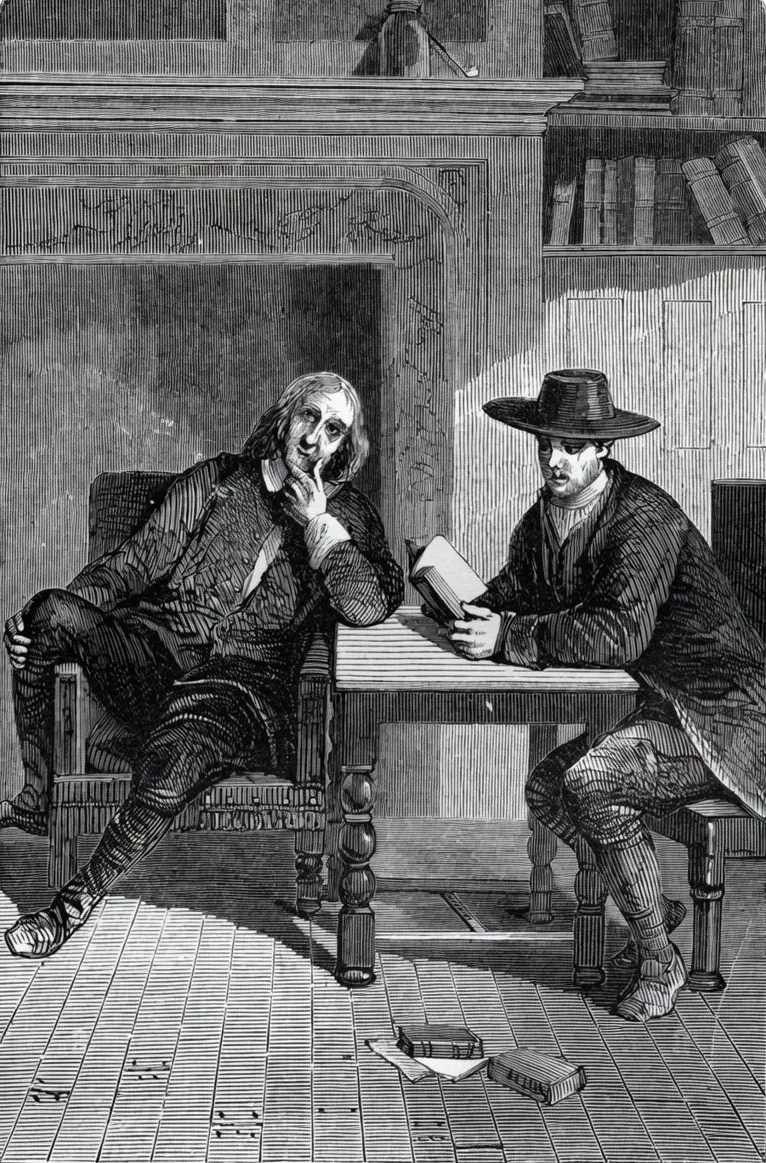
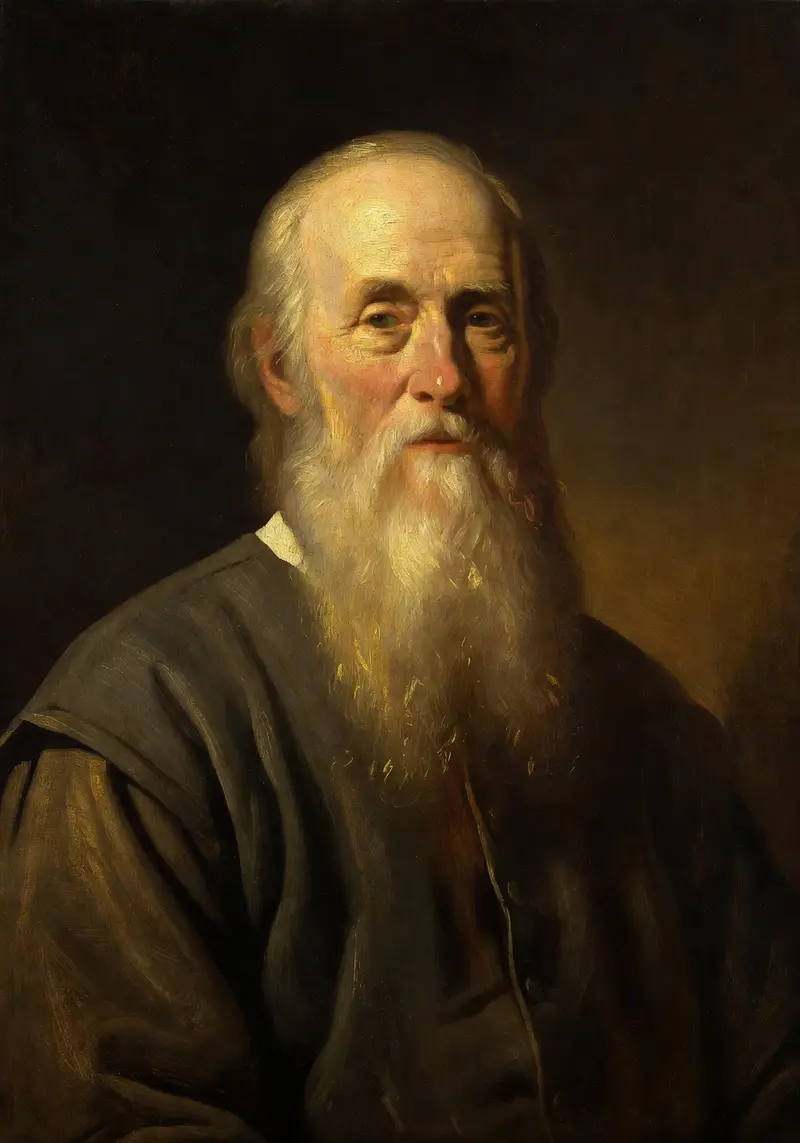
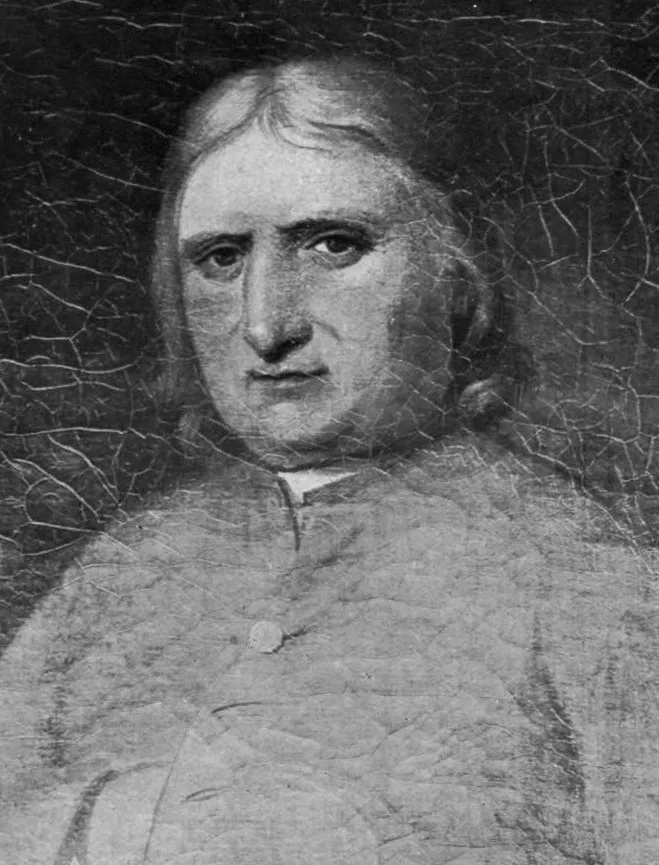
Portrait of George Fox
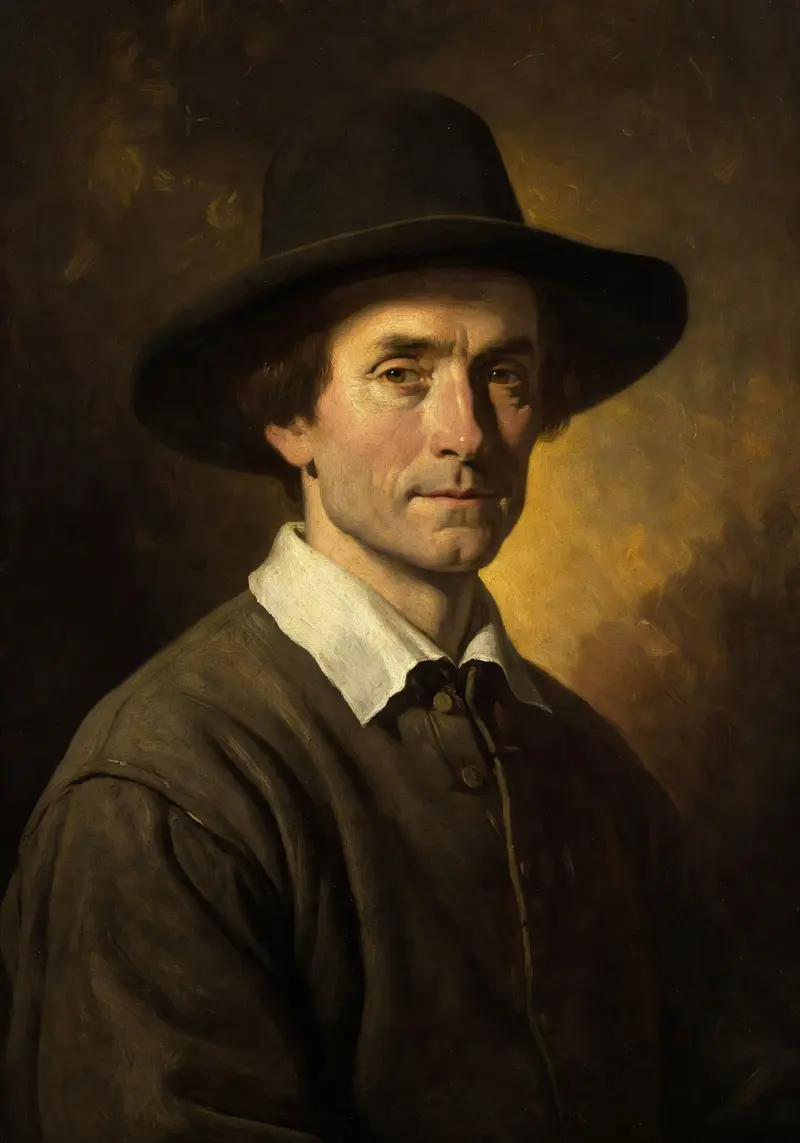
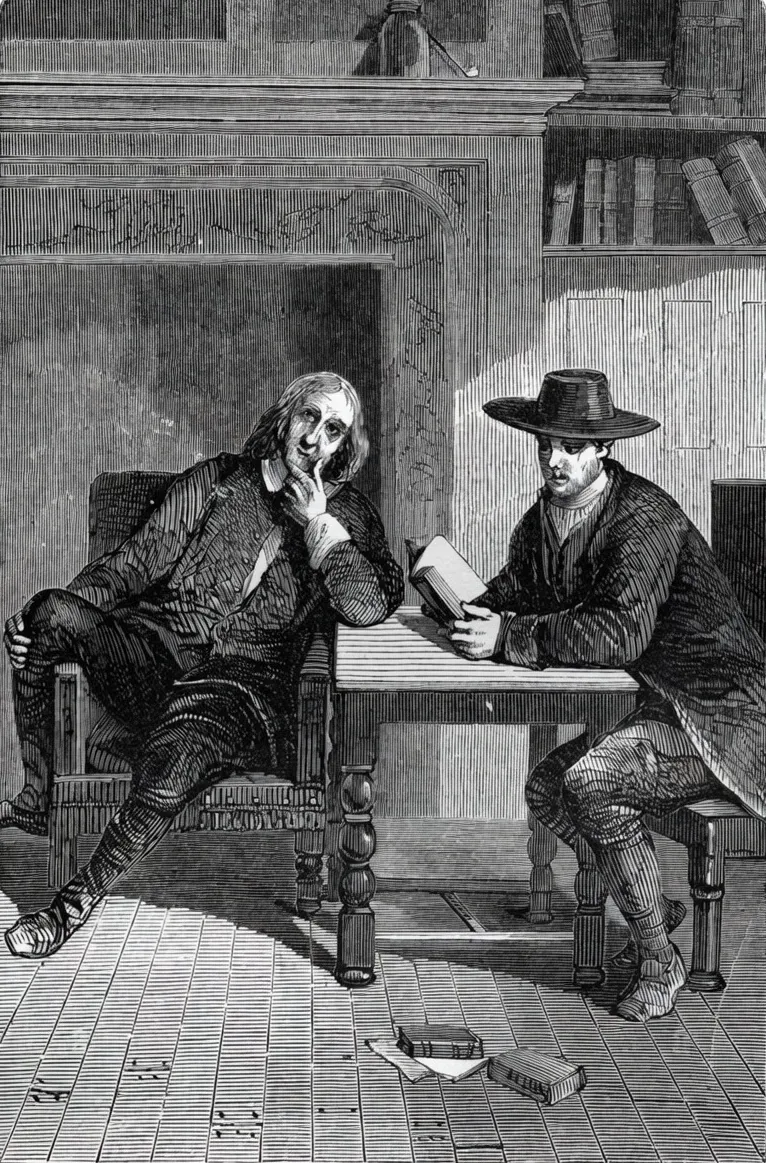
Portrait of Thomas Ellwood

George Fox & Thomas Ellwood

Friendship

A poet and writer named Thomas Ellwood became one of Fox's closest friends. Ellwood is responsible for the famous story that Fox told a judge "to tremble at the word of the Lord," giving the movement its nickname.

"I met with George Fox... who was a man of God, endued with wisdom and understanding..."

— Thomas Ellwood, History of the Life

Ellwood edited and published Fox's Journal after the founder's death, preserving one of the most important texts of early Quakerism.
Portrait of George Fox
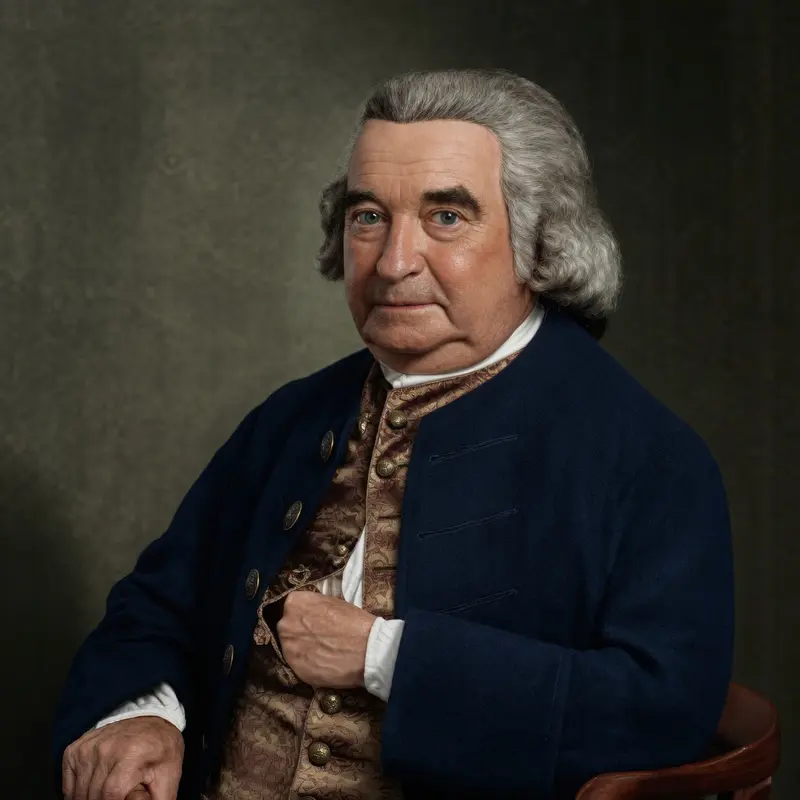
Portrait of Isaac Penington

Fox's Influence on Penington

Influence

Isaac Penington was an educated Anglican who came to Quakerism through deep personal seeking. His writings are among the most theologically profound in the tradition, building on Fox's insights.

"The Lord sought me, and I sought Him; and I found that that which was without life was not the thing that my soul thirsted after."

— Isaac Penington

Penington's letters became beloved for their gentle wisdom and helped articulate Quaker spirituality for later generations.

Portrait of George Fox
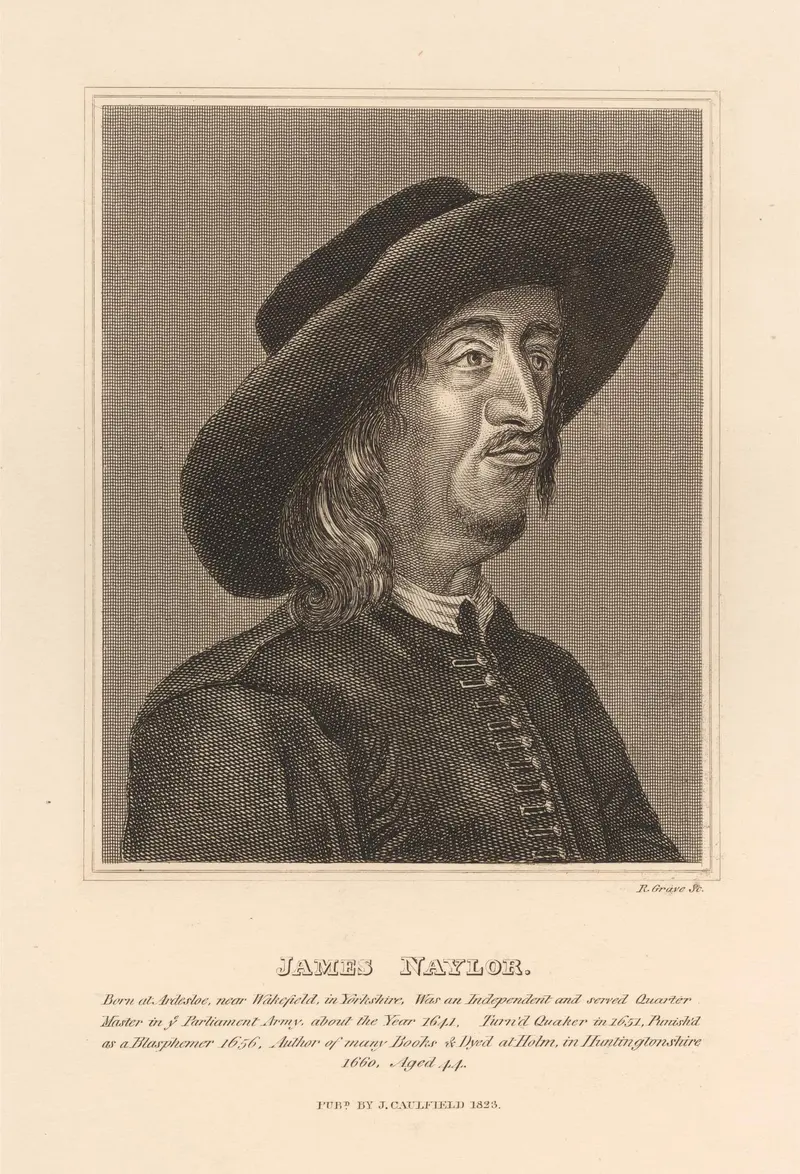
Portrait of James Nayler

Fox & Nayler: Friendship and Crisis

Controversy

James Nayler was among the most gifted early ministers—a powerful preacher who drew thousands. But his 1656 entry into Bristol, accepted by some as Christ returned, caused a crisis that nearly destroyed the movement.

"There is a spirit which I feel that delights to do no evil, nor to return evil for evil..."

— James Nayler's last words

Nayler was brutally punished by Parliament and reconciled with Fox before his death in 1660.

Portrait of George Fox
Portrait of Edward Burrough

Fox & the First Publishers

Mentor / Disciple

Edward Burrough was among the "First Publishers of Truth" who spread Fox's message across northern England in 1652. His brilliant defense of Quakerism in letters to rulers established the movement's public voice.

"We desire you to know that we do not seek to destroy either Magistrates or Ministry, but to exalt righteousness in all."

— Edward Burrough, epistle to Charles II

Burrough died in prison at age 29, leaving behind a substantial body of writings that defend and explain the early Friends' faith.

Portrait of George Fox
Portrait of Margaret Fell

Margaret Fell: The Mother of Quakerism

Friendship & Partnership

Margaret Fell, wife of Judge Thomas Fell, became convinced in 1652 and transformed her home at Swarthmoor Hall into a hub for Quaker activity. She sheltered persecuted Friends, preserved manuscripts, and corresponded widely.

"And God hath said that His Daughters shall Prophesy, as well as His Sons."

— Margaret Fell, Women's Speaking Justified

Her essay "Women's Speaking Justified" defended women's ministry from biblical texts. She preserved George Fox's letters and kept the movement going through his imprisonments.

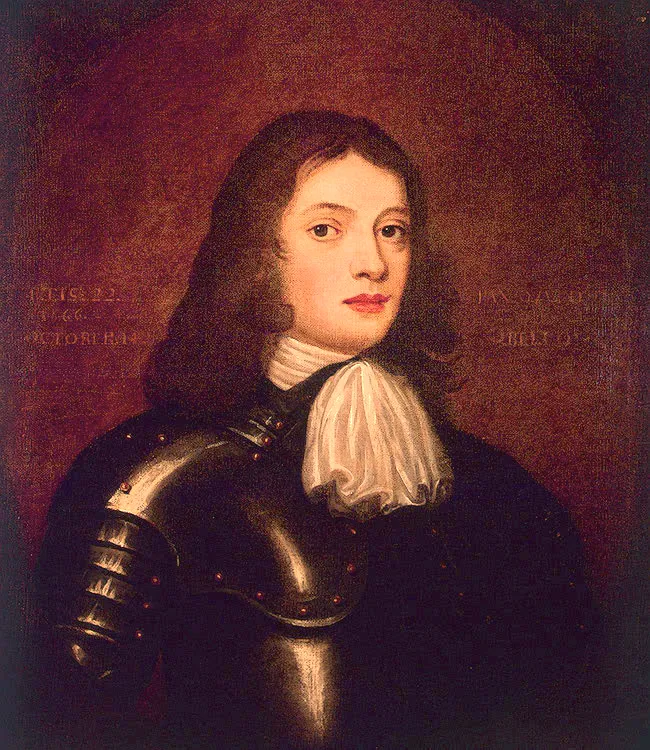
Portrait of William Penn
Portrait of George Fox

Penn & Fox: The Sword Anecdote

Mentor / Disciple

After his convincement, the young gentleman William Penn still wore a sword — a symbol of his social rank. Troubled by the contradiction, he asked Fox's advice. Fox's reply was characteristically wise and non-coercive: "Wear it as long as thou canst." Penn soon laid it aside of his own accord.

"A strong man, a new and heavenly-minded man... all of God Almighty's making."

— William Penn, on George Fox

Fox's gentle approach — trusting the Light to work within Penn rather than imposing rules — became a hallmark of Quaker pastoral care and perfectly illustrates the movement's radical trust in individual conscience.

Portrait of William Penn
Portrait of Thomas Ellwood

Penn & Ellwood: No Cross, No Crown

Friendship

When Penn was imprisoned in the Tower of London in 1668–69, Thomas Ellwood visited him regularly and literally transcribed "No Cross, No Crown" from Penn's dictation — a quiet act of devoted friendship that preserved one of the great classics of Christian spirituality.

"No pain, no palm; no thorns, no throne; no gall, no glory; no cross, no crown."

— William Penn, No Cross, No Crown

Ellwood's role as scribe for both Penn and Fox makes him one of the most important (and underappreciated) figures in preserving early Quaker literature.

Portrait of Francis Howgill
Portrait of Edward Burrough

Howgill & Burrough: Inseparable Ministers

Friendship

Francis Howgill and Edward Burrough arrived in London together in 1654 as inseparable ministry partners. They had both been Seekers before Fox convinced them at Firbank and Sedbergh. Together they won more converts in London than any other early Friends — preaching in Bull and Mouth tavern to crowds of hundreds.

"We were reckoned the chief leaders in the North, and had the greatest assemblies."

— Francis Howgill

Their partnership ended when Burrough died in Newgate prison in 1663. Howgill was already imprisoned at Appleby and would die there in 1669.

Portrait of George Fox
Portrait of George Whitehead

Whitehead: The Living Bridge

Mentor / Disciple

Convinced by Nayler's preaching at just 16, George Whitehead became the youngest of the First Publishers of Truth. He outlived every other first-generation Quaker leader, dying in 1723 at age 87 — having witnessed and participated in every phase of the movement from its explosive beginnings through legal toleration.

"I was early called and chosen of the Lord."

— George Whitehead

His decades of Parliamentary lobbying secured the 1696 Affirmation Act, which allowed Quakers to affirm rather than swear oaths — removing one of the most persistent tools of persecution.

Portrait of Stephen Crisp
Portrait of George Fox

Stephen Crisp: The Continental Voice

Influence

Stephen Crisp came to Quakerism through Baptist and Independent congregations before encountering Friends at Colchester in 1655. While most early ministers focused on England and America, Crisp made over a dozen missionary journeys to Holland and Germany, preaching in English, Dutch, and German.

"I travelled through much of Holland, Friesland, and part of Germany... and the Lord opened many doors."

— Stephen Crisp

His allegorical autobiography, A Short History of a Long Travel from Babylon to Bethel, became a Quaker classic — a spiritual Pilgrim's Progress in miniature.

Portrait of William Penn
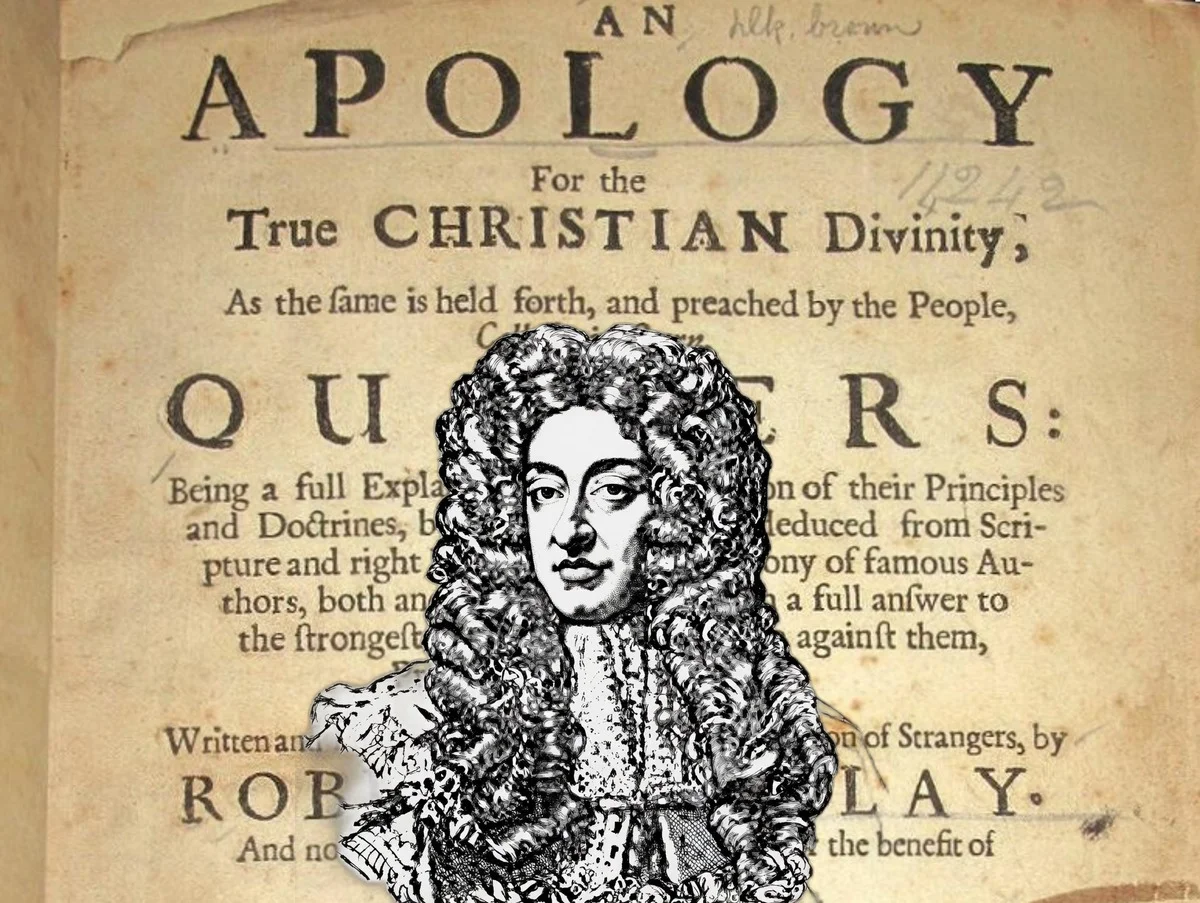
Portrait of Robert Barclay

Penn & Barclay: Theology Meets Statecraft

Friendship

William Penn and Robert Barclay were the two most educated and socially prominent Quakers of their generation. Together they traveled to Holland and Germany with Fox in 1677, debating Continental theologians and planting meetings. Penn brought political genius; Barclay brought systematic theology.

"In God's truth we are one... and our unity is in the unchangeable covenant of life."

— Robert Barclay

Barclay's Apology gave Quakerism its intellectual foundation; Penn's Pennsylvania gave it a nation. Together they made Quakerism impossible to dismiss as mere enthusiasm.

Portrait of Isaac Penington
Portrait of Thomas Ellwood

Penington & Ellwood: The Chalfont Connection

Mentor / Disciple

As neighbors in Chalfont St. Peter, Isaac Penington became Thomas Ellwood's spiritual mentor and closest elder Friend. It was through Penington's household that the young Ellwood met both George Fox and John Milton — the two men who would most shape his literary career.

"He was a man of deep experience, and the Lord made him very serviceable in his generation."

— Thomas Ellwood, on Isaac Penington

The Chalfont Quaker community, centered on the Penington household, produced some of the most important spiritual writing in the tradition — a remarkable concentration of talent in one Buckinghamshire village.

Portrait of Margaret Fell
Portrait of Mary Fisher

Fell & Fisher: The Pioneer Women

Friendship

Margaret Fell, the gentlewoman who ran Quakerism's headquarters from Swarthmoor Hall, and Mary Fisher, the servant girl who traveled alone to address the Ottoman Sultan — together they embody the extraordinary range of women's ministry in early Quakerism. Fell coordinated and supported the traveling ministers from her home; Fisher was among the most fearless of those she sent out.

Fisher was whipped at Cambridge, imprisoned and deported from Boston, and received by Sultan Mehmed IV with more courtesy than any Christian magistrate showed her. Fell's theological defense of women's preaching gave scriptural authority to ministries like Fisher's.

Portrait of George Fox
Portrait of William Dewsbury

Dewsbury: Voice from York Castle

Mentor / Disciple

William Dewsbury was convinced in Yorkshire during Fox's first great northern campaign of 1651 and became one of the most powerful early preachers. But after the Restoration, he spent nearly twenty of his remaining twenty-eight years imprisoned at York Castle — and from his cell wrote the epistles on church discipline and spiritual faithfulness that helped hold the movement together through persecution.

While Fox built the movement's external structure, Dewsbury shaped its inner discipline. His prison epistles circulated among meetings across England, providing pastoral guidance to communities whose leaders were often in jail themselves.

Portrait of George Fox
Portrait of William Edmundson

Edmundson: Father of Irish Quakerism

Mentor / Disciple

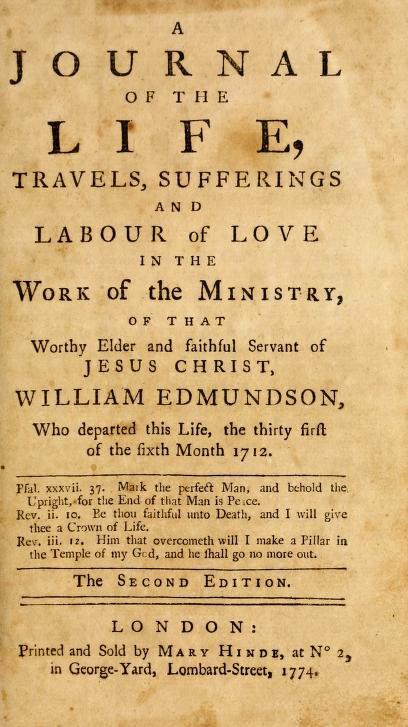
William Edmundson, a former Cromwellian soldier settled in County Armagh, established the first Quaker meeting in Ireland at Lurgan in 1654. He planted meetings across the island, endured persecution from both Anglicans and Catholics, and built the Irish Quaker network that would produce Joseph Pike, Thomas Wilson, and generations of faithful Friends.

The Irish Quaker community Edmundson founded became remarkably durable — it survived the Williamite wars, penal laws, and famine, and continues to this day. His journal, published posthumously, is one of the great adventure narratives of early Quakerism.

Portrait of John Woolman
Portrait of Anthony Benezet

Woolman & Benezet: The Antislavery Conscience

Friendship

John Woolman, the New Jersey tailor who walked through the southern colonies refusing to eat food prepared by slaves, and Anthony Benezet, the Huguenot-born teacher who founded schools for African American children in Philadelphia — together they waged the most effective antislavery campaign in eighteenth-century America. Their patient witness persuaded Philadelphia Yearly Meeting to condemn slaveholding in 1758, decades before abolition became a political movement.

"Placing on men the ignominious title SLAVE... tends gradually to fix a notion in the mind, that they are a sort of people below us in nature."

— John Woolman, Some Considerations on the Keeping of Negroes

At Benezet's funeral in 1784, hundreds of Black Philadelphians walked in the procession. Woolman's Journal became an American literary classic — Charles Lamb called it "the only American book he had ever read twice."