Born in Cumbria
Born into a farming family in the Westmorland Dales region, well versed in Scripture from an early age despite limited formal education.
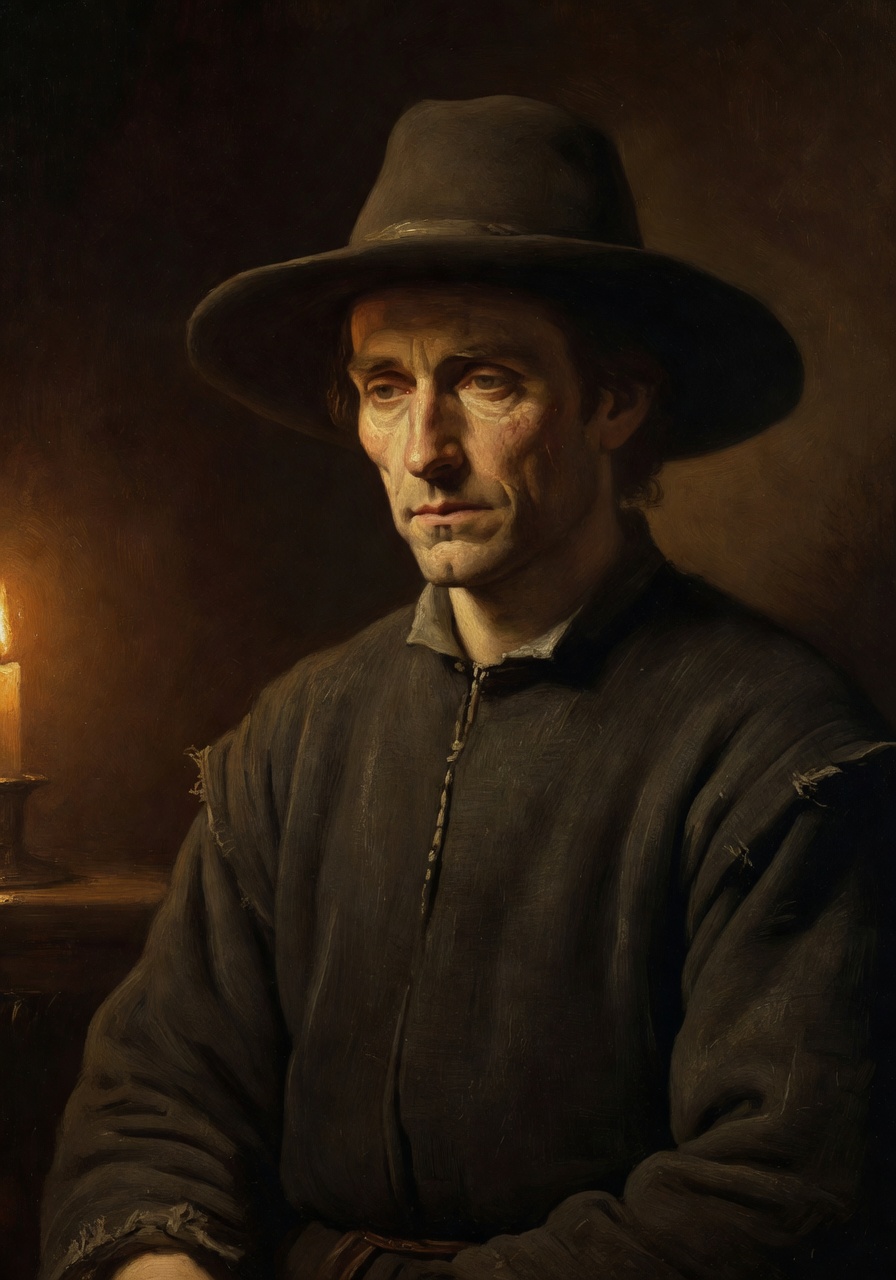
1618–1669 · Cumbria, England
Valiant Sixty pioneer who brought Quakerism to Ireland
"The True Light hath taken away my darkness and given me understanding free, though I have not read to the learned men." —
Born into a farming family in the Westmorland Dales region, well versed in Scripture from an early age despite limited formal education.
Hearing George Fox preach at Firbank Fell, Howgill was convinced of the truth of the Quaker message. He immediately became one of the earliest public ministers.
Possibly the first Quaker missionary to Ireland, Howgill established meetings and convinced local magistrates of the truth of Quaker principles.
After completing his missionary work in Ireland, Howgill returned to England to continue his ministry throughout the northern counties.
Arrested in London under the new Conventicle Act targeting religious dissenters. His health began to fail during imprisonment.
Died at age 51 while still imprisoned in Appleby Gaol, one of many early Friends who did not survive persecution.
Howgill was convinced by Fox's preaching at Firbank Fell in 1652. He became one of the earliest and most effective ministers in the Valiant Sixty.
Howgill and Burrough often worked together as young ministers, spreading the Quaker message with similar zeal and energy.
Swarthmore Hall provided a base of operations and correspondence for Howgill's missionary journeys.
One of Howgill's most significant theological works, exploring the spiritual inheritance of believers and the inward light of Christ.
A collection of sermons and letters demonstrating Howgill's powerful ministry and understanding of Scripture despite his lack of formal education.
Howgill's examination of why Quakers could not remain within the structures of the established church.
Bold writings of prophetic denunciation and spiritual warning typical of early Quaker ministers.