Born in Hertfordshire
Born in the ninth month of 1758, of parents in profession with Friends, and brought up under a guarded education among them.
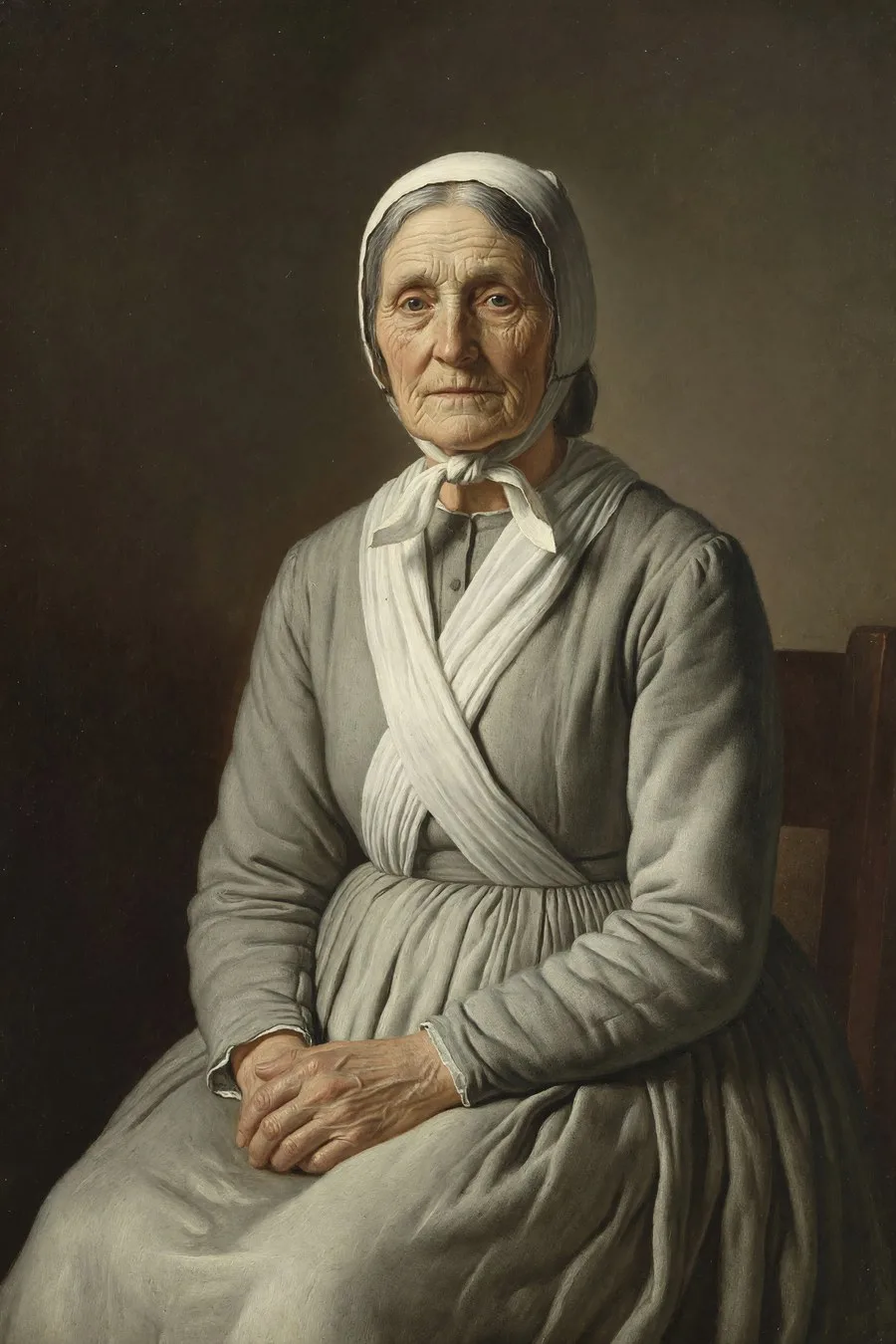
Minister Restored in Her Seventy-Second Year
“It felt like the paying of a debt long owing.” — Mary Hagger
Most Quaker memoirs of this period record a ministry that ran. Mary Hagger’s records one that stopped.
She was recorded a minister at Hertford in 1794, at thirty-six. Three years later a concern to visit the meetings of Essex was laid upon her, and she did not go. That refusal is the hinge of the whole book, and she never let herself off it. What came after she called a long wilderness travel — a phrase she uses without self-pity and without much elaboration, because the particulars were ordinary enough: a husband whose health and business both failed, a child buried in 1809, widowhood in 1810, and then years given to paying debts that were partly hers and largely his. Somewhere in the middle of it she stopped speaking in meeting altogether, and at length resigned her seat among the ministers and elders, on the plain ground that she could no longer fill it.
She was silent for about twenty years. There is no dramatic account of those years, because nothing happened in them worth recording by the standards of the genre — which is precisely why they are worth reading. She attended meetings. She kept her family. She wrote down, at intervals, that she did not know whether the gift would ever be restored and that she had no claim on it.
In 1827 she moved to Ashford in Kent. In the fifth month of 1830, in her seventy-second year, Folkestone Monthly Meeting reinstated her a minister. She then travelled for ten years: Bedfordshire and Hertfordshire in 1831, Nottinghamshire in 1834, and at last, in 1837, Essex — the county she had been sent to forty years before. Of that visit she wrote that it felt like the paying of a debt. She died at Ashford in the first month of 1840, near eighty-two.
The Testimony of Folkestone Monthly Meeting, printed with her memoranda, is careful to say what her neighbours actually saw: an old woman, plain in dress and speech, whose ministry was short and searching, and who was in her place at meeting when younger Friends were not.
Biographical detail on this page is drawn from Mary Hagger’s own memoranda and letters and from the Testimony of Folkestone Monthly Meeting concerning her, as printed in The Friends’ Library, Volume VII.
Born in the ninth month of 1758, of parents in profession with Friends, and brought up under a guarded education among them.
Her gift in the ministry was acknowledged by her monthly meeting when she was about thirty-six, after several years of exercise she describes as reluctant rather than eager.
A concern to visit the meetings of Essex was laid upon her, and she did not give up to it. She afterwards regarded this refusal as the beginning of the long stripping that followed, and returned to it repeatedly in her papers.
Her husband's health and circumstances declined together. The years that followed brought straitened means, business anxiety, and the withdrawal of the openings she had once known in meeting.
The loss of a child in the midst of the family's difficulties. Her memoranda record neither complaint nor explanation, only the resolve to be found waiting.
Her husband died, leaving debts. She undertook the payment of her own and of many of his, and gave years to it.
Believing herself no longer able to fill the station, she resigned her seat in the meeting of ministers and elders — the formal end of a ministry that had already been silent for some time. Nearly two decades of silence followed.
She left Hertfordshire and settled at Ashford, within the compass of Folkestone Monthly Meeting, where she spent the remainder of her life.
In the fifth month of 1830 Folkestone Monthly Meeting reinstated her a minister. She had been silent about twenty years and was in her seventy-second.
Her first journey after restoration returned her to the county she had left, visiting the meetings of Bedfordshire and Hertfordshire.
A general visit to the meetings of Nottinghamshire, undertaken in her seventy-sixth year.
The certificate was returned for the visit to Essex — the concern first laid on her in 1797 and refused. She wrote of it as the paying of a debt long owing.
She died at Ashford in the first month of 1840, in about the eighty-second year of her age and the tenth of her restored ministry.
Her own memoranda and letters, with the Testimony of Folkestone Monthly Meeting concerning her — the record of a ministry refused, withdrawn, and given back after twenty years of silence.