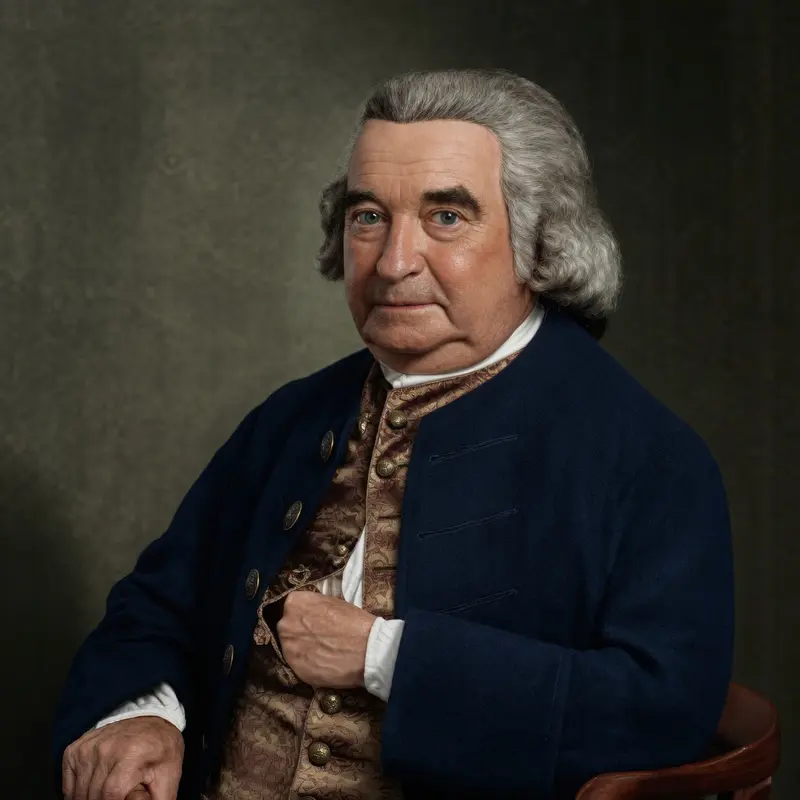
Born in Bedfordshire
Born into a prosperous family and educated for the law.
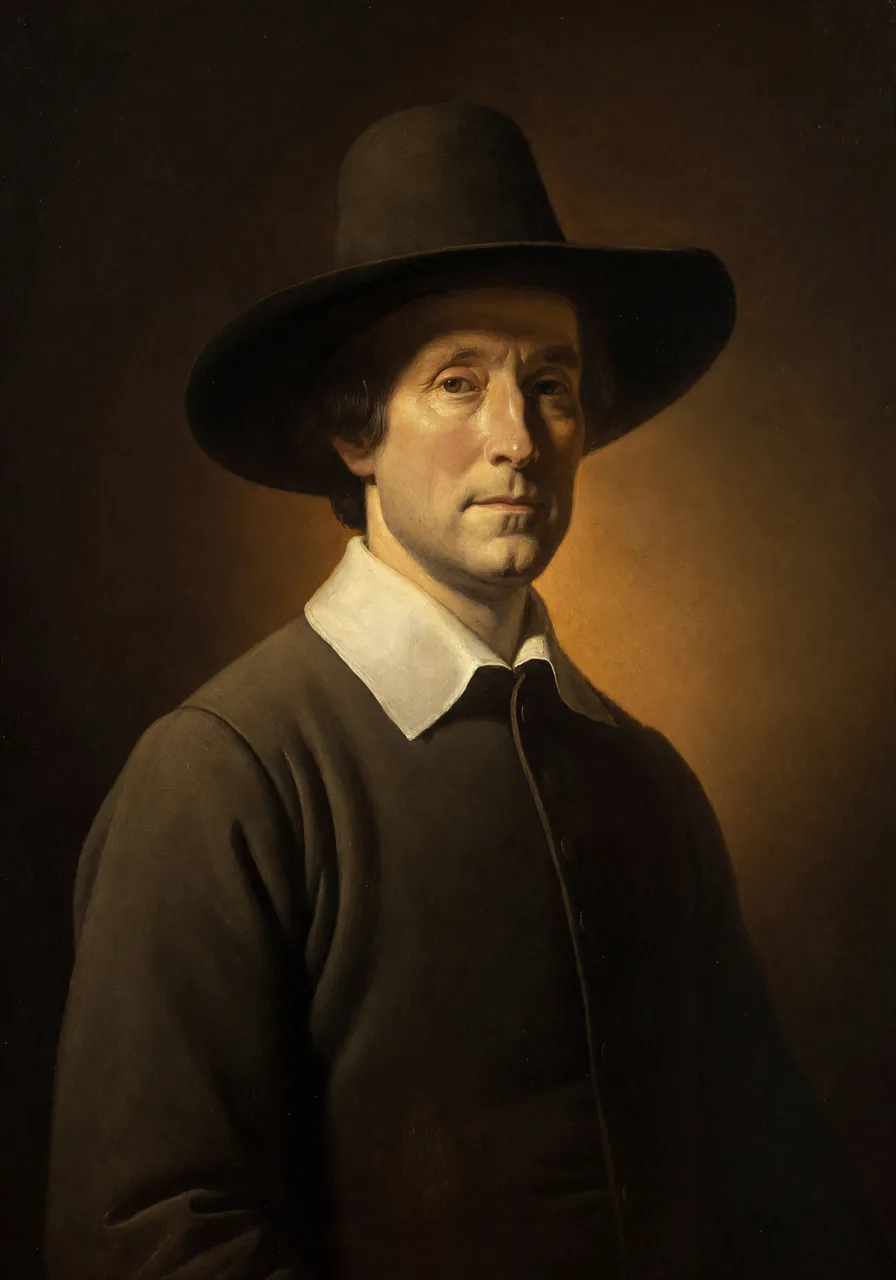
Justice of the Peace Turned Quaker Apologist
“I found the witness of God in my own heart more certain than all the traditions of men.” — John Crook
John Crook was born in 1617. At eleven he was sent to school in London and at seventeen apprenticed in the same city. By his own account of his religious experience, he was a serious child in an irreligious household, withdrawing into quiet places to pray and weep while the family around him scoffed. During his apprenticeship he fell in with the Puritans — attending sermons and lectures, reading the Bible, arguing religion — and threw himself into their practices with real earnestness. It brought him no relief. He describes being seized, in the middle of his own devotions, by the conviction that the enemy of all good had taken possession of his soul, and he continued in that condition for years, in his own phrase “professing and playing” at religion.
He nevertheless rose in the world. Under the Commonwealth he was made a Justice of the Peace for Bedfordshire and held property at Beckerings Park, a man of standing in county government.
In the middle 1650s George Fox came into Bedfordshire and held a great meeting at Crook’s own house, at which many were convinced. The sources differ slightly on the sequence — Gough places Crook’s own convincement at that meeting, while Janney says he had come among Friends shortly before it — but the outcome is not in doubt: he was deprived of his commission as a magistrate almost immediately. What he lost in office he made up in service: he became, in Gough’s phrase, “an able minister, and a very serviceable member of this religious community.”
His house then became one of the central places of early Quakerism. In 1658 a general Yearly Meeting for the whole nation was held at Crook’s in Bedfordshire. Fox attended and wrote that “it continued three days, and many Friends, from most parts of the nation, came to it; so that the inns and towns thereabouts were filled; for many thousands of people were at it.” It was one of the first genuinely national gatherings the movement had held.
Crook’s best-known hour came out of the persecution that followed the Restoration. Arrested without warrant, committed to prison, and moved to Newgate, he was brought to the Old Bailey on 25 June 1662 with Isaac Grey, a physician, and John Bolton, a goldsmith. All three were men of property and character; all three were put into the bail dock among felons and murderers. Crook was called to the bar and, instead of being charged with any offence, was asked when he had last taken the oath of allegiance — a question designed to make him convict himself. “I have been six weeks in prison,” he answered, “and am I now called to accuse myself?”
He conducted his own defence on the ground of Magna Carta and the Petition of Right, and was refused at every turn. The three were found guilty of refusing the oath and sentenced to praemunire: forfeiture of all real estate for life and all personal estate forever, out of the king’s protection, and imprisonment during the king’s pleasure. “We are still under God’s protection,” Crook replied. Their estates were seized at once.
From prison Crook drew up a narrative of the trial and got it into print, so that — as Gough puts it — the king and the nation should not remain ignorant of what was being done. The document was preserved at length in both Sewel’s History and Besse’s Collection of the Sufferings, and it remains one of the sharpest first-hand exhibits of Restoration justice in the whole Quaker record. Crook was released the following month. He lived until 1699, one of the last of the first generation.
Biographical detail on this page follows Samuel Janney’s History of the Religious Society of Friends*, John Gough’s* History of the People called Quakers*, and Joseph Besse’s* Collection of the Sufferings of the People called Quakers*, all of which draw on Crook’s own published works.*
Born into a prosperous family and educated for the law.
Appointed JP under Cromwell. Active in county governance while pursuing spiritual truth.
After years as an Independent and seeker, Crook heard Quaker ministers and was convinced.
Lost his position and was imprisoned repeatedly for refusing oaths and holding illegal meetings.
Died at age 82, one of the last surviving first-generation Quakers.
One of the most psychologically honest conversion narratives in early Quaker literature.
A systematic account of Quaker theology, informed by his legal training and wide reading.