Now Available: purchase & instantly download our modernized Quaker classics. Shop the Library →
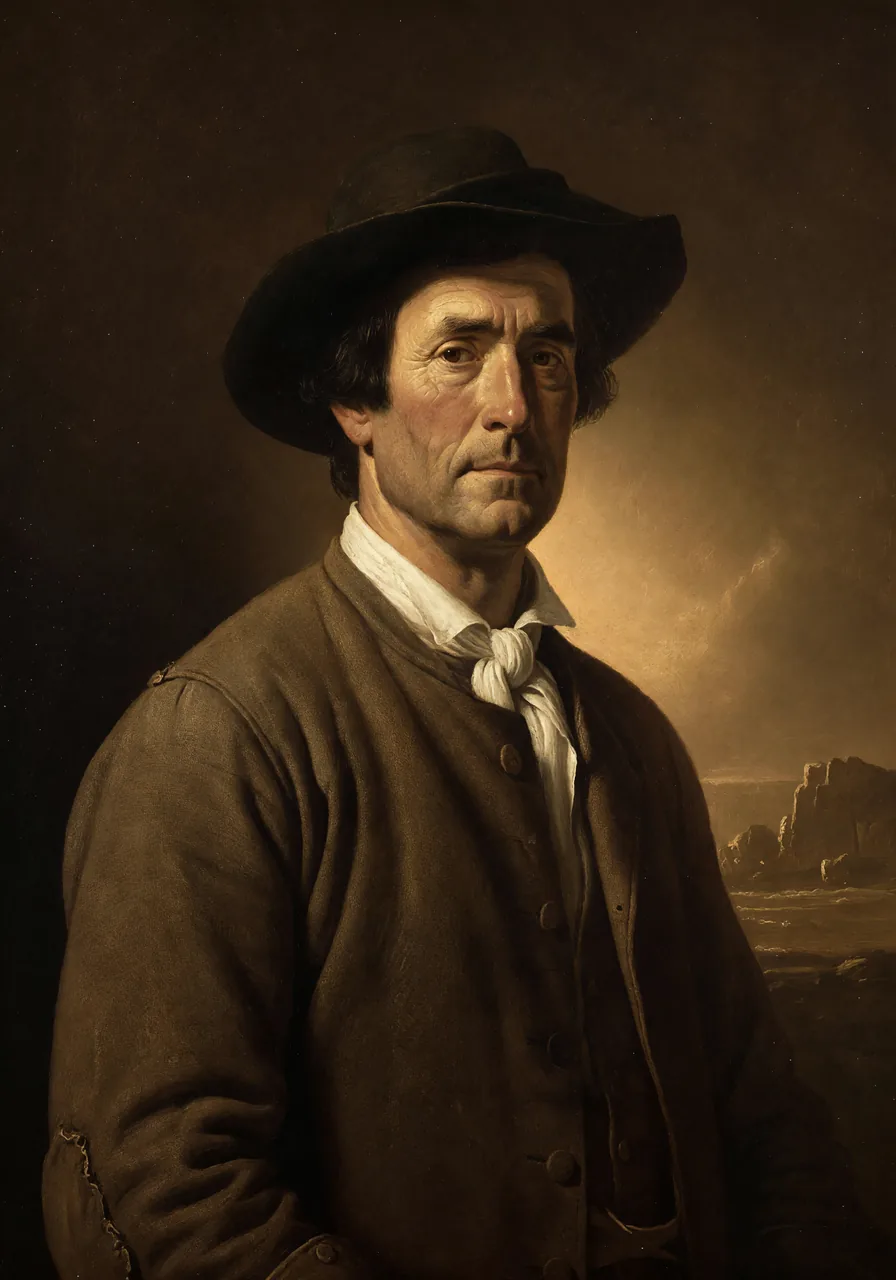
John Croker
1673–1727 · Plymouth, Devon, England

John Croker

The Plymouth Boy Marooned by Privateers — A Serge-Weaver's Memoir of Providence

I think I may say, I never slept more sweetly in a bed, than I did on those stones — John Croker

Life & Ministry

1673

Born at Plymouth

'I was born on the eighth of the Twelfth month, in the year 1673, in the town of Plymouth, in the county of Devon'; his father was 'of the family of the Crokers of Lyneham', his mother Anstice the daughter of a Kingsbridge shopkeeper, and both suffered imprisonment for the Truth.

1686

Apprenticed and Shipped to Pennsylvania

Bound apprentice to John Shilson, 'by trade a serge maker, but who also professed surgery', and sailed with Plymouth Friends for Pennsylvania; set to clearing land in the woods until his master's family died of the country's distemper, after which James Fox took him in and he was put 'to school to George Keith'.

1690

Privateers, a Rock, and an Open Boat

'After having been four years in the province of Pennsylvania' (so about 1690) he embarked for Newcastle; the ship was taken by three French privateers, he slept six weeks on boards in the hold among 'islands of ice', was set ashore on a rock, and with twenty-four others rowed three nights and two days to the uninhabited coast of Newfoundland.

1690

Home to Plymouth

A merchant named Strong, who knew his father, paid his passage in a train-oil ship to Dartmouth; escaping the press because he was 'but a youth', he walked to Plymouth and made himself known to his mother, 'who with open arms received me, being as one that had been dead and was now alive again'.

1691

A Fuller's Apprentice at Exeter

'Between seventeen and eighteen years of age' he bound himself to a fuller at Exeter who proved 'an ill-company keeper, and a night-playing man' and was put in the Mint prison for debt within two years; Croker returned to Plymouth 'and to combing of wool I went, and earned six or seven shillings a week'.

1695

Mother's Death and First Marriage

'About the year 1695' the Lord 'was pleased to deprive me of my dear and honourable mother'; retiring to his father in Cornwall he spun tobacco, and 'being come to the twenty-second year of my age' married the daughter of John and Margery Peters of Minver, living with her parents.

1697

First Words in Meeting

Walking alone in an orchard on a first-day morning 'it opened in me like a voice, saying, This day will I open thy mouth, if thou art faithful to me'; that day, 'at the latter part of the meeting I spake a few words'. The year is not given; it falls within his first marriage.

1699

Death of His First Wife

'At length it pleased the Lord to take from me my dear wife in the year 1699', after about three years together; a cloud of darkness followed 'so that my mouth was stopt for a time', until his father and mother Peters counselled and prayed him through it.

1702

Marries Elizabeth Gates of Horsham

Having travelled with John Peters through Sussex to the London Yearly Meeting in company with Elizabeth Gates, he married her soon after 'the Yearly meeting in 1702', Friends coming from Cornwall and London; they 'took a house, and settled at Liskeard'.

1711

Removal to Horsham, Sussex

'After nine years, having had four children, whereof three were living', and 'some unreasonable men' having deprived him of his chief income, he sold shop and household goods at Liskeard and removed to his wife's country; a letter to his sister Tabitha Fox is dated 'Horsham, the 20th of Ninth month, 1712'.

1727

Death at Horsham

The memoir gives no date; the Friends' Library editor says his death 'took place about sixteen years after' the removal to Horsham, which agrees with the 1727 given by Wright's bibliography. Taken with 'a violent pain' after speaking at Horsham first-day meeting, he told his wife, 'not cold enough yet', and in great pain gave those who attended him 'not one hasty or unsavoury word'.

Available Works

Brief Memoir of the Life of John Croker

Proposed

His own account of his Plymouth childhood, Pennsylvania apprenticeship, capture by French privateers, marooning and escape to Newfoundland, and his two marriages, with a letter to his sister Tabitha Fox, advice to his son Charles, and his wife's account of his last illness; printed in the Friends' Library, volume 14 (1850).