Born at Newtown, near Carlisle
Born Jane Sibson, daughter of Jonathan and Jane Sibson of Newtown, in Cumberland. The Testimony of Pardshaw Monthly Meeting gives the year as 1734 or 1735.
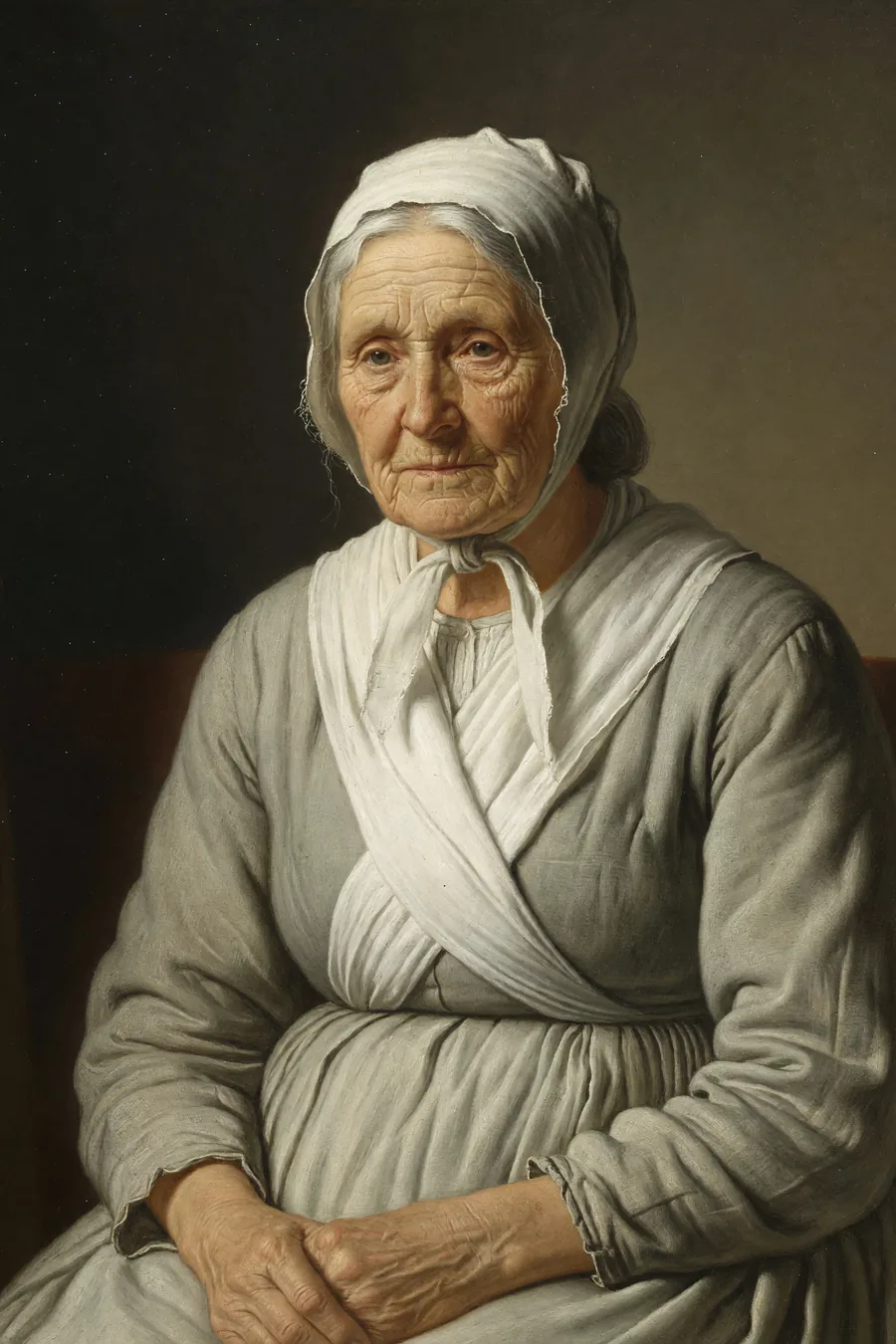
Forty-Two Years in the Ministry, and Forty-Two Years of Doubt
“The Lord gave, and the Lord hath taken away. Blessed be the name of the Lord.” — Jane Pearson
Jane Pearson belongs to a class of Friends the record usually loses: a woman of the northern counties who ministered for four decades without travelling far, who buried a husband and then every one of her children, and who left behind not a journal of service but an account of her own mind.
The outward facts are quickly told. Born Jane Sibson at Newtown near Carlisle in 1734 or 1735; fatherless early; married at twenty-two to John Pearson of Graysouthen; widowed at thirty-nine with a house full of children. She first spoke in meeting about 1773 and was a recorded minister for some forty-two years. She visited Westmoreland and Lancashire in 1777, added Yorkshire in 1779, and in 1787 made one long journey south through eight counties as far as Cornwall. Then she moved to Whitehaven and stayed there until she died in 1816.
The inward facts are the reason the book survives. Jane Pearson wrote about spiritual darkness with a candour that the memorial literature of her period rarely permitted. She doubted her own openings. She rose in meeting and afterward questioned whether she should have. She feared she was deceived, feared she had been born a Friend rather than made one, and went looking — for most of a lifetime — for some evidence that she was finally accepted. Her editor understood exactly what he had: he commended the book to “the diffident and the dejected,” and observed that her inward conflicts and searchings of heart “were equal to most that we read of.”
Those who sat with her at Whitehaven remembered something the papers do not show. Her ministry, the Testimony of Pardshaw Monthly Meeting records, was sound, lively and edifying, and though her appearances were frequent and sometimes large she was particularly careful not to go beyond the pure openings of the holy Spirit. In prayer she was remarkably powerful and fervent. The woman her meeting describes and the woman her private papers describe are the same person seen from opposite sides — which is, in the end, what makes the book worth reading.
Biographical detail on this page is drawn from the Testimony of Pardshaw Monthly Meeting in Cumberland, read and approved at Cockermouth on the 19th of third month, 1816, and from the editor’s preface and conclusion to Sketches of the Life of Jane Pearson (1817).
Born Jane Sibson, daughter of Jonathan and Jane Sibson of Newtown, in Cumberland. The Testimony of Pardshaw Monthly Meeting gives the year as 1734 or 1735.
Jonathan Sibson died while she was very young. The principal care of her education fell to her mother, who gave her a guarded and religious upbringing among Friends.
About the eighteenth year of her age she accompanied a female Friend through Cumberland on a visit to the meetings there. In early life she was strongly inclined to gaiety, and her memoirs record at length what it cost her to be turned from it.
At about twenty-two she married John Pearson, a religious young man of Graysouthen, within the limits of Pardshaw Monthly Meeting.
After several years of what the Testimony calls deep baptisms and refining operations, she received a gift in the ministry and appeared very acceptably in public testimony.
Her husband was removed by death, leaving her with a numerous family of children. Some died in early life and the rest after reaching maturity; she outlived them all.
The first of her recorded religious visits, generally attending the meetings of Friends in Westmoreland and Lancashire.
A second general visit, extending into Yorkshire.
Her most extensive travel in the ministry: Lancashire, Cheshire, Shropshire, Worcestershire, Warwickshire, Somersetshire, Devonshire and Cornwall. Her Gospel labours in these visits yielded, in her meeting's words, the consoling reward of peace.
About this period she settled at Whitehaven on the Cumberland coast, where she resided for the rest of her life, diligent and exemplary in the attendance of meetings.
She died quietly about three o'clock on the morning of 20 February 1816, having been thought to be exercised in prayer though the words could not be gathered. She was interred in Friends' burial-ground at Whitehaven on the 25th of second month after a large and solemn meeting, about eighty-one years of age and a minister about forty-two years.
Her papers were published the year after her death, at her own request that a friend should look them over when she was gone and dispose of them as he thought best, together with a specimen of her verses and the Testimony of Pardshaw Monthly Meeting.
Her own memoirs, written in her own hand and published the year after her death, with the Testimony of Pardshaw Monthly Meeting appended — a candid record of widowhood, bereavement, and a long ministry carried under constant self-doubt.