Now Available: purchase & instantly download our modernized Quaker classics. Shop the Library →
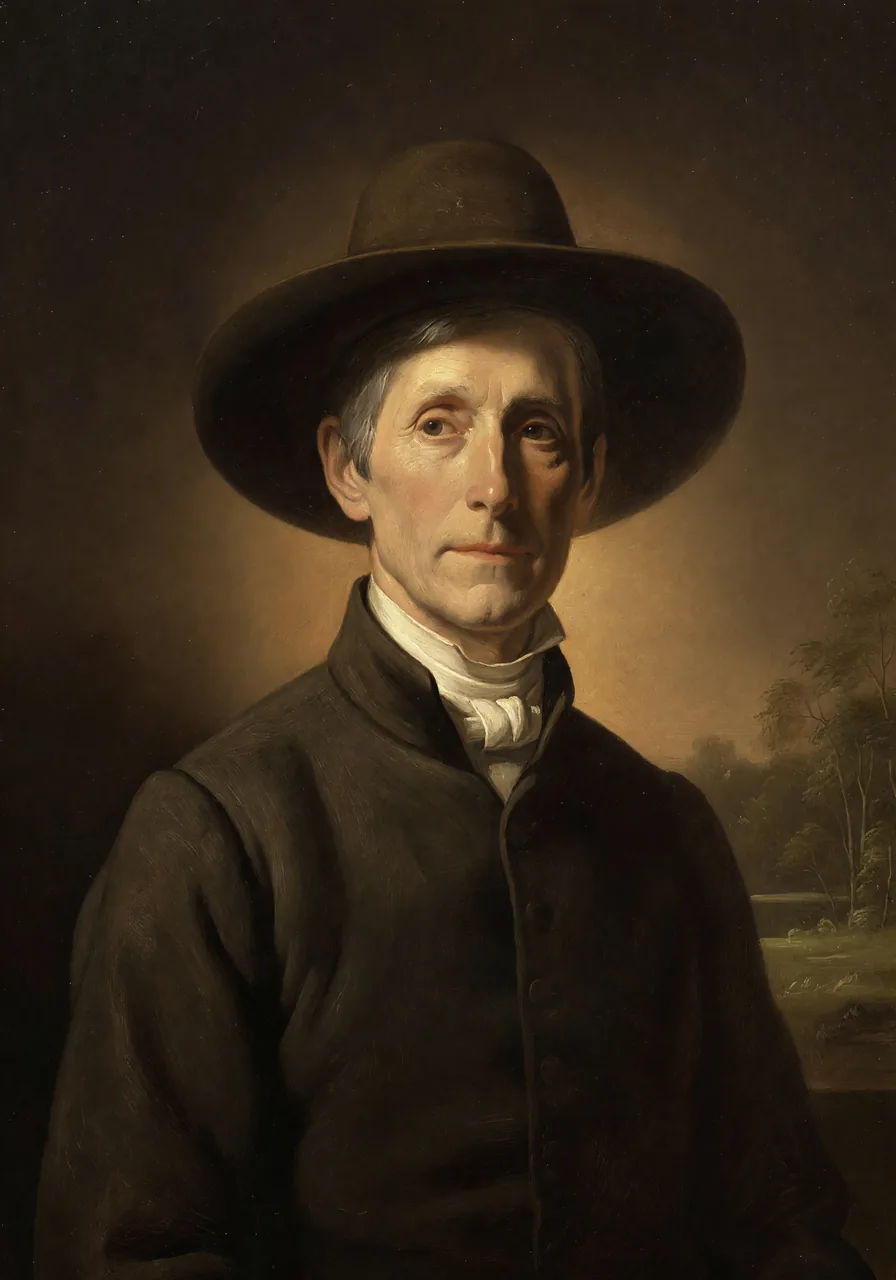
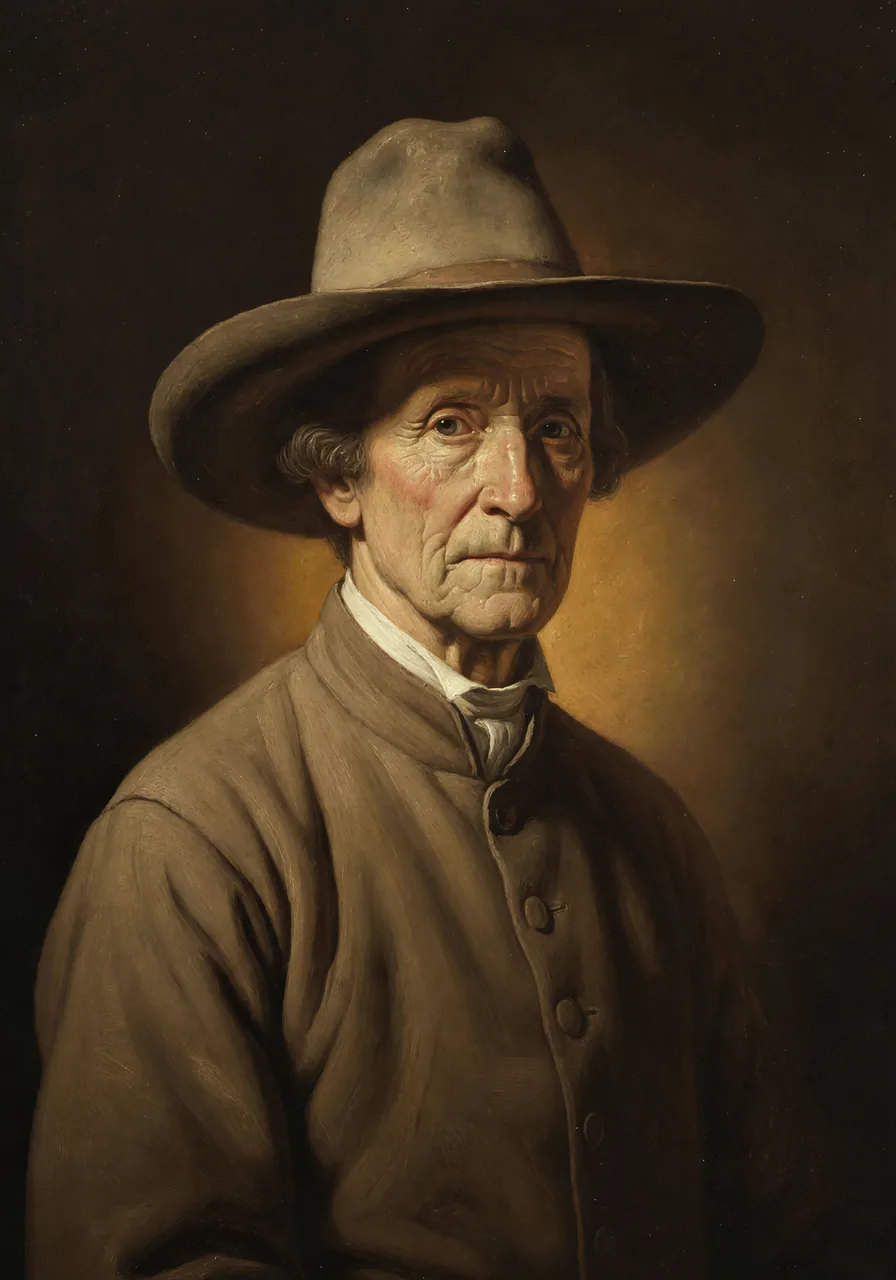
Henry Hull
1765–1834 · Harrison's Purchase, Westchester County, New York

Henry Hull

The Stanford Farmer-Minister — From the Slave Auctions of the South to the Yearly Meeting in London

A humble possession in the Truth is preferable to riches, honours, or the applause of the world. — Henry Hull

Life & Ministry

1765

Born at Harrison's Purchase

Born 'at or near Harrison's Purchase, in Westchester county, State of New York, the 16th of third month, 1765', son of Tiddeman Hull of Conanicut, Rhode Island, and Elizabeth Franklin of the Purchase; his grandfather and great-grandfather were sea-captains who declined promotion for their sons in the king's service on account of their peace principles.
1777

Refugees to Stanford

After the family fled New York in 1776 and their house at White Plains filled with sick and wounded soldiers after the battle, they moved through Ridgefield, Connecticut, and 'in the fourth month, 1777' reached Stanford in Dutchess County, a wild settlement with only two Friends' families and a small meeting in Paul Upton's log house.

1785

Married Sarah Hallock

Married Sarah, daughter of Edward Hallock, 'a pious wife' who 'proved a true help-meet to me, both in my religious progress and in the cares of life'; the following year he began the diary from which his memoir is drawn.

1794

First Journey to New England

With Samuel Upton he attended Newport Yearly Meeting and travelled through Maine to the Kennebec, where he fell ill in a bark-roofed log house at Green while a gale tore off part of the roof; he preached the next day on the difference between those called of Christ to the ministry and those who never knew the call.

1799–1800

Through the Slave States

Set out alone in the fifth month 1799 for 'the southern and western states', preached against 'the iniquity of the slave trade' at Crooked Run in Virginia, watched slaves pounding their peck of corn at night and families sold on the auction stage, reached Georgia by New Year's Day 1800, and sailed home through a six-day storm off the coast.

1802

Canada with Enoch Dorland

Visited Friends in the newly settled western parts of New York and in Canada with his 'beloved friend Enoch Dorland', enduring 'many privations and hardships'; he later reckoned he had travelled 'some thousands of miles' in Vermont, New York and Canada, often with John Gurney of his own meeting.

1810–1812

Great Britain and Ireland

Embarked for Liverpool in the sixth month 1810 (the Stanford testimony's '1801' is corrected by the printed erratum), visited meetings through Ireland, England, Wales and Scotland, and at the London Yearly Meeting of 1812 opened a letter telling him that his wife Sarah, his son and his aged mother had died of a contagious fever at Stanford; Sarah died 'on the 4th of the fourth month, 1812, aged about forty-eight years'.

1812

Address to the Youth

In his bereavement he 'drew up an address to the youth in England and Ireland, giving a little account of our setting out in life'; printed as An Address to the youth of the Society of Friends, in Great Britain and Ireland, it was 'extensively circulated in that land' and reprinted by Ohio Yearly Meeting after his death.

1814

Married Sarah Cooper

In the ninth month 1814 married Sarah Cooper of Newtown, New Jersey, 'in whom he found a true help-meet', and settled again at Stanford; journeys to the Yearly Meetings of Baltimore and North Carolina (1815), Philadelphia (1817) and Ohio (1819) followed.

1826–1828

The Hicksite Separation

His memoranda of 1826 and 1828 record the 'unsettlement' spread by Elias Hicks and his partisans, the locked and guarded basement door at New York Yearly Meeting, and his own stand with those who 'adhered to our ancient principles'; the Stanford testimony calls him 'a faithful watchman upon the walls'.

1834

Death near Barnesville, Ohio

Though 'in the seventieth year of his age' and in failing health, he set out in the summer of 1834 with Henry Warrington for the Yearly Meetings of Ohio and Indiana; after attending Ohio Yearly Meeting at Mount Pleasant he rode toward Still Water, sickened at the house of Benjamin Hoyle near Barnesville, said 'If I die, I die in peace with all mankind', and died there on the 23rd of the ninth month 1834; he was buried in Friends' ground at Still Water.

Connections & Relationships

Elizabeth Fry

Elizabeth Fry

Host and Comforter in England

Lodged with Joseph and Elizabeth Fry, whose house at Plashet he 'considered my English home'; travelled with them to the Essex Quarterly Meeting in 1811, set out with Elizabeth Fry and her sister Priscilla Gurney on the first day of 1812 to visit Surrey and Sussex, and found in her 'a true sympathizer and a friend indeed' when the news of his wife's death reached him.

Thomas Shillitoe

Thomas Shillitoe

Met in Yorkshire

At Highflats near Huddersfield in 1811 he 'met Thomas Shillitoe, who had recently returned from his arduous labours in visiting the drinking houses in some parts of Ireland; and our meeting was to mutual satisfaction'.

Martha Routh

Martha Routh

Met at Liverpool

Found Martha Routh at Liverpool seeing off departing Friends: 'I was glad of the company of this devoted servant of the Lord, whom I had often seen in my native land, when she was there in Truth's service'; he later lodged with Richard Routh at Manchester and 'enjoyed the company of his valuable wife'.

Mary Dudley

Mary Dudley

Sat in Her Meeting

In London in 1812, 'very weak in body', he attended a meeting 'proposed by Mary Dudley, to be held on third-day morning', which 'proved a favoured season — several Friends being engaged in testimony and supplication'.

Joseph Hoag

Joseph Hoag

Fellow Minister

On his 1794 New England journey he met Joshua Evans and Joseph Hoag at Jared Bassett's, attending their meeting together; the Hoag families of Stanford were the only Friends near his father's farm when the family arrived in 1777.

William Sewel

William Sewel

Read in Boyhood

Reading aloud to his aged grandmother as a boy, 'I early read Sewel's History of the rise and progress of Friends', and the sufferings it recounted settled in him the belief 'that if I lived to be a man, I should espouse the cause for which they suffered'.

Available Works

Memoir of the Life and Religious Labours of Henry Hull

Proposed

His own memorandums, begun as a diary in 1786 and transcribed 'in the forty-eighth year of my age' for his children and grandchildren, edited with the Stanford Monthly Meeting testimony, the Ohio Yearly Meeting minute and a memorial of his father Tiddeman Hull, and published in the Friends' Library, volume 4 (Philadelphia, 1840).

An Address to the Youth of the Society of Friends in Great Britain and Ireland

Proposed

Written in London after the Yearly Meeting of 1812, when he had just learned of the deaths of his wife, son and mother; it gives 'a little account of our setting out in life' with the letters describing his wife's last illness, was widely circulated in Britain, and was reprinted by the Meeting for Sufferings of Ohio Yearly Meeting in 1834.