Born in Cumbria
Born into a farming family in the Westmorland Dales region, well versed in Scripture from an early age despite limited formal education.
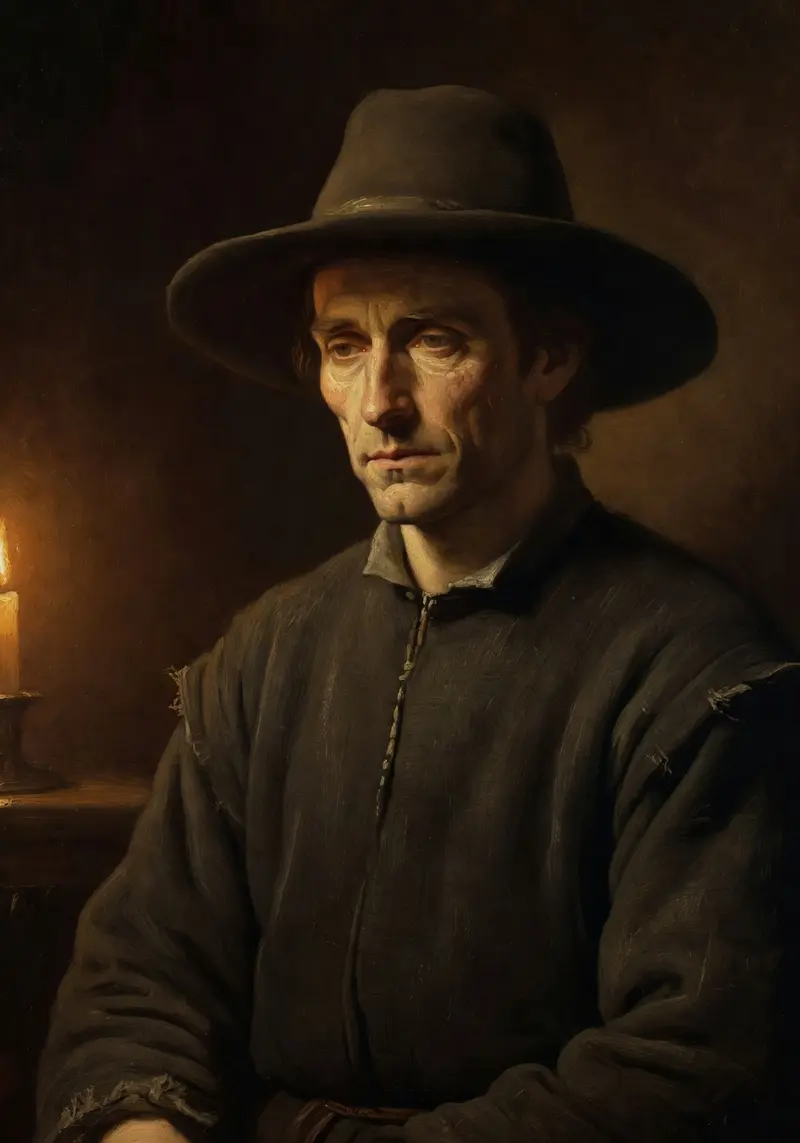
First Publisher of Truth, Inseparable Partner of Burrough
“The True Light hath taken away my darkness and given me understanding free, though I have not read to the learned men.” — Francis Howgill
Francis Howgill was born in 1618 in Cumbria, in the English Westmorland Dales. Unlike many of the university-educated ministers of his era, Howgill came from a farming background with limited formal schooling. Yet he possessed a remarkable knowledge of Scripture and spiritual insight that would prove essential to the early Quaker movement.
In 1652, Howgill heard George Fox preach at Firbank Fell and was immediately convinced of the truth of the Quaker message. Like many of the earliest Friends, he felt called to share this truth with others and became one of the first public ministers. His convincement was part of a wave of transformations sweeping through northern England, as the “Valiant Sixty” took up the work of spreading the message fox had received.
Howgill’s most significant missionary journey came in 1653 when he traveled to Ireland, possibly becoming the first Quaker missionary to that island. Despite the dangers and difficulties of travel in that era, he established meetings and convinced magistrates of the truth of Quaker principles. This early expansion beyond England’s borders demonstrated the international scope of the movement.
After returning to England in 1655, Howgill continued his ministry throughout the northern counties. His writings reflect a clear, direct style that made complex theological concepts accessible to ordinary people. Works like “The Inheritance of Jacob Discovered” and “The Dawnings of the Gospel Day” established him as a significant early Quaker author, despite having no formal training.
In 1663, during the renewed persecution under the Conventicle Act, Howgill was arrested in London. His health, already fragile, deteriorated during imprisonment. He died in 1669 at age 51 in Appleby Gaol, one of many early Friends who did not survive the persecution that accompanied the movement’s growth.
Howgill’s legacy lives in the principles his life embodied: that faithful ministry requires no formal credentials, that the inward light speaks to all sincere seekers, and that the Quaker message had power to transform lives across social and geographic boundaries. His work in Ireland helped establish Quakerism as an international movement, while his writings continue to offer spiritual insight to modern readers.
Born into a farming family in the Westmorland Dales region, well versed in Scripture from an early age despite limited formal education.
Hearing George Fox preach at Firbank Fell, Howgill was convinced of the truth of the Quaker message. He immediately became one of the earliest public ministers.
Possibly the first Quaker missionary to Ireland, Howgill established meetings and convinced local magistrates of the truth of Quaker principles.
After completing his missionary work in Ireland, Howgill returned to England to continue his ministry throughout the northern counties.
Arrested in London under the new Conventicle Act targeting religious dissenters. His health began to fail during imprisonment.
Died at age 51 while still imprisoned in Appleby Gaol, one of many early Friends who did not survive persecution.
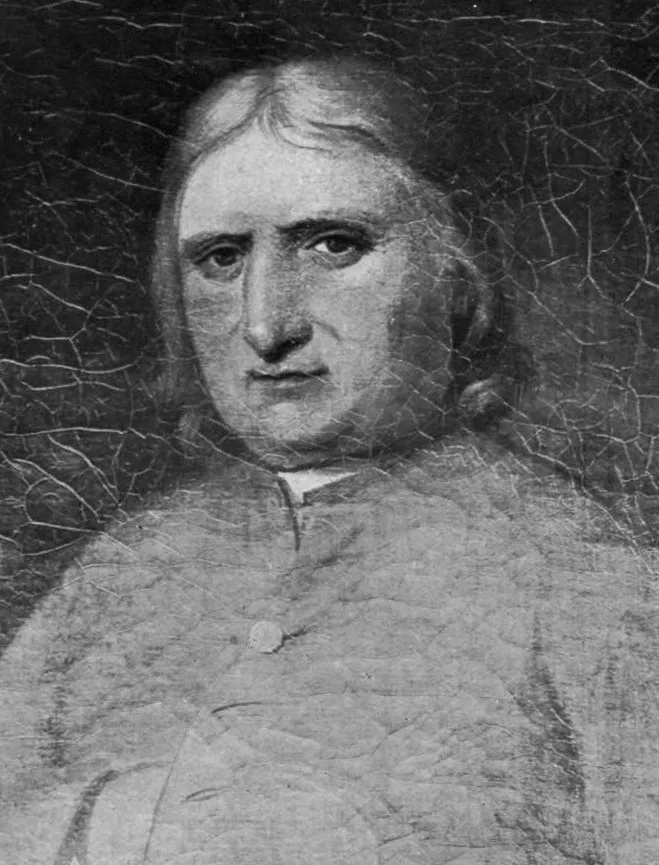
Howgill was convinced by Fox's preaching at Firbank Fell in 1652. He became one of the earliest and most effective ministers in the Valiant Sixty.
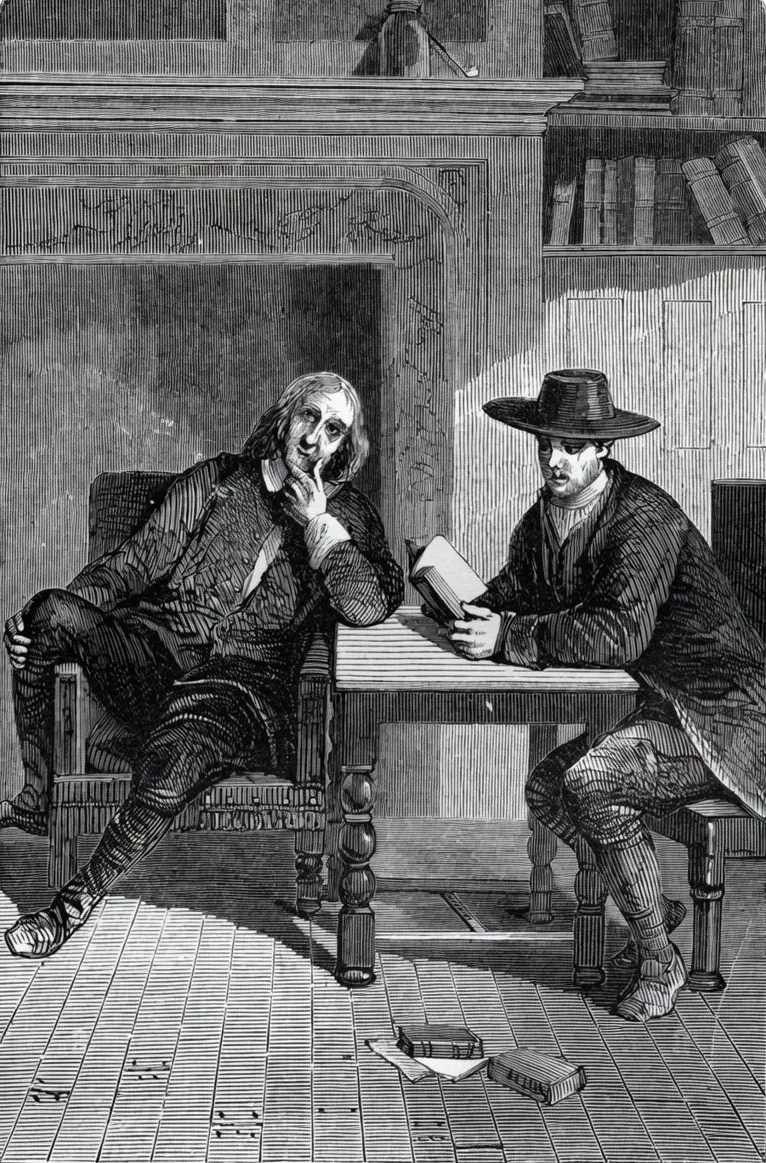
Howgill and Burrough were inseparable partners who brought Quakerism to London in 1654. Together they converted thousands and wrote the movement's first published defenses.
Swarthmore Hall provided a base of operations and correspondence for Howgill's missionary journeys.
The collected early writings of Francis Howgill (1618–1668), one of the Valiant Sixty. This first volume gathers his tracts and epistles of 1654–1656, including the great declaration The Inheritance of Jacob Discovered.
The second volume from the 1676 folio, gathering Howgill’s great doctrinal tracts of 1658: The Measuring Rod, the Mysteries of God’s Kingdom, Mystery Babylon, and the Invisible Things of God.
Howgill's examination of why Quakers could not remain within the structures of the established church.
Bold writings of prophetic denunciation and spiritual warning typical of early Quaker ministers.