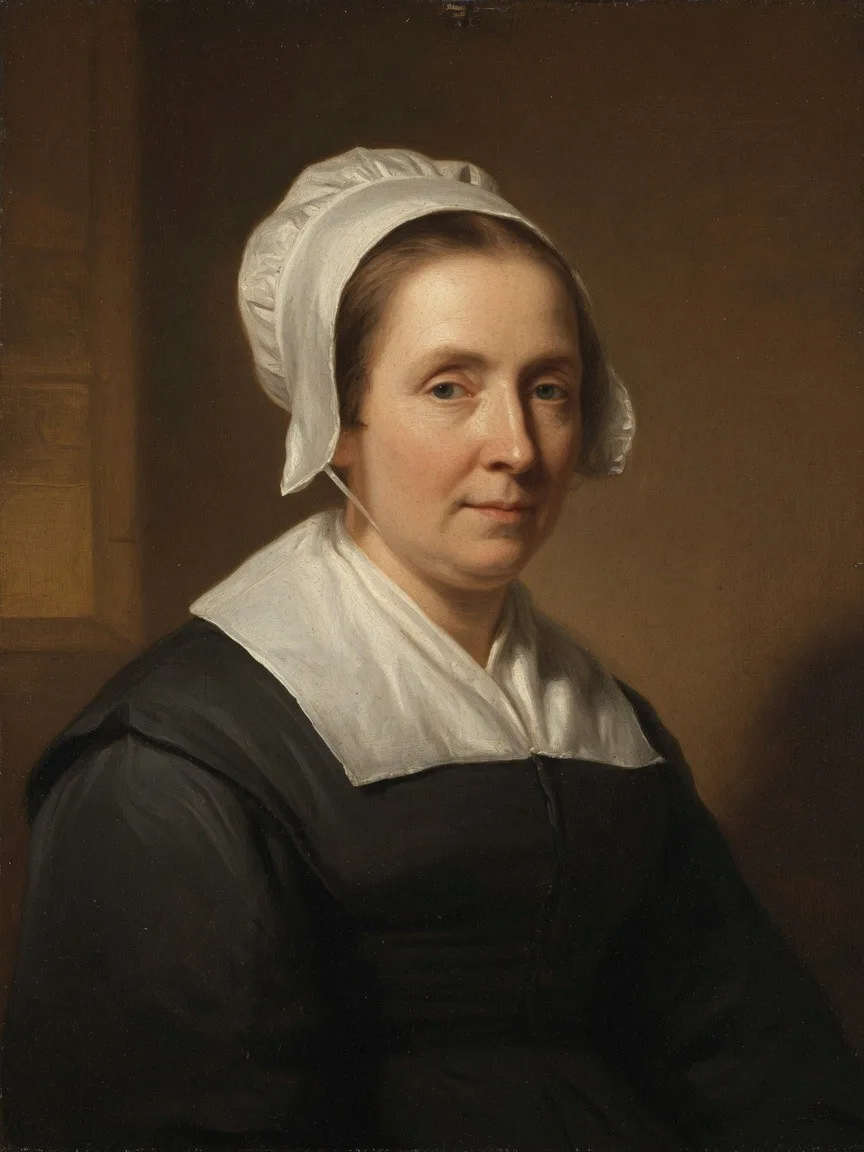
Born in London
Eldest child of Charles Bathurst. Her father's account of her life records that she suffered great weakness of body from infancy.
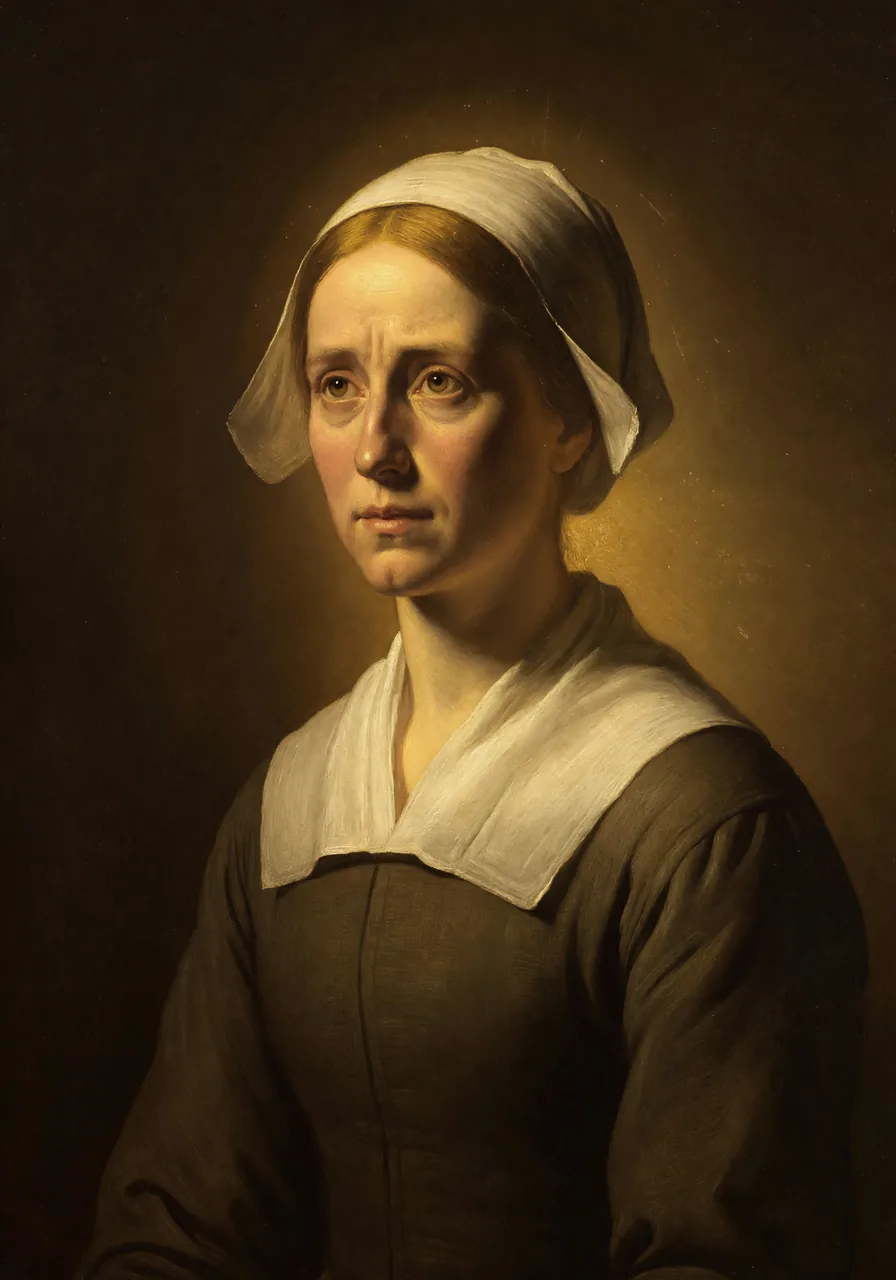
Young Theologian, Defender of Women's Ministry
“The spirit of truth doth not lead into contention, but into peace and unity.” — Elizabeth Bathurst
Elizabeth Bathurst was born in London in 1655, the eldest child of Charles Bathurst. Her father’s own account of her life records that she suffered “great weakness of body” from infancy, and she was never healthy. She and her siblings came among Friends in 1678, when she was twenty-three. Everything she is remembered for was done in the seven years that remained to her.
She announced herself almost immediately. Shortly after her convincement she stood up in Samuel Annesley’s Presbyterian chapel in London and interrupted the worship to speak against the doctrine of reprobation — the Calvinist teaching that God has eternally consigned part of humanity to damnation. It was a characteristic act. Bathurst’s quarrel with the religion she had left was never merely about forms of worship; it was about whether God’s offer of salvation reached everyone or only the elect, and she went to the sharpest possible point of disagreement on her first outing.
Her major work appeared the following year, when she was twenty-four. Its full title is Truth’s Vindication: Or, A Gentle Stroke to Wipe Off The Foul Aspersions, False Accusations and Misrepresentations, Cast Upon the People of God, call’d Quakers (1679), and it is one of the very few early systematic accounts of Quaker belief — written, remarkably, three years after Barclay’s Latin Apology and by a woman with no university training whatever. It sets out and defends the Quaker doctrine of salvation, concentrating on the two convictions she cared most about: that the offer of salvation is universal, and that the guidance of the Holy Spirit is trustworthy.
She discussed the book with George Whitehead before publication, and he wrote afterwards of her “excellent gift, both of understanding, life and utterance”. The judgement has held up. The historian Sarah Apetrei has called Bathurst by far the most theologically sophisticated of the many women leaders among early Friends. Truth’s Vindication was reprinted six times by Quaker publishers, including a posthumous edition of 1691 which Tace Sowle chose as the first project of her own after taking over her father’s press.
Her second substantial work, The Sayings of Women… in several places of the Scriptures (1680), is a theological defence of women’s authority to preach and teach, assembled from scripture itself. Where Margaret Fell had opened that argument in Women’s Speaking Justified, Bathurst pressed it with a systematising mind and a close command of the text.
She undertook several preaching tours and was imprisoned at least once, in the Marshalsea. She died in 1685, aged thirty. The body of theological writing she left behind is small, but it is the work of a first-rate mind operating at full stretch under conditions — chronic illness, a hostile legal environment, and the near-total exclusion of women from formal learning — that make its existence remarkable. Friends Illuminated has her work in the research queue; it is not yet in production.
Biographical detail on this page follows Mary Van Vleck Garman’s chapter on Bathurst in Early Quakers and their Theological Thought 1647–1723 (Cambridge, 2015), Sarah Apetrei’s “The Universal Principle of Grace” (Gender & History, 2009), and the Orlando Project’s entry on her; publication history from the Sowle Press editions.
Eldest child of Charles Bathurst. Her father's account of her life records that she suffered great weakness of body from infancy.
Came among Friends at twenty-three. Soon after, she interrupted worship at Samuel Annesley's Presbyterian chapel to speak against the doctrine of reprobation.
At just twenty-four, published her masterwork defending Quaker theology and women's spiritual authority.
Published a defence of women's authority to preach and teach, assembled from the scriptures themselves.
Died young, leaving behind a body of theological writing remarkable for its depth and precision.
A systematic defense of Quaker principles and women's ministry, remarkable for its theological sophistication.
A theological defence of women's authority to preach and teach, argued from scripture. Published 1680.