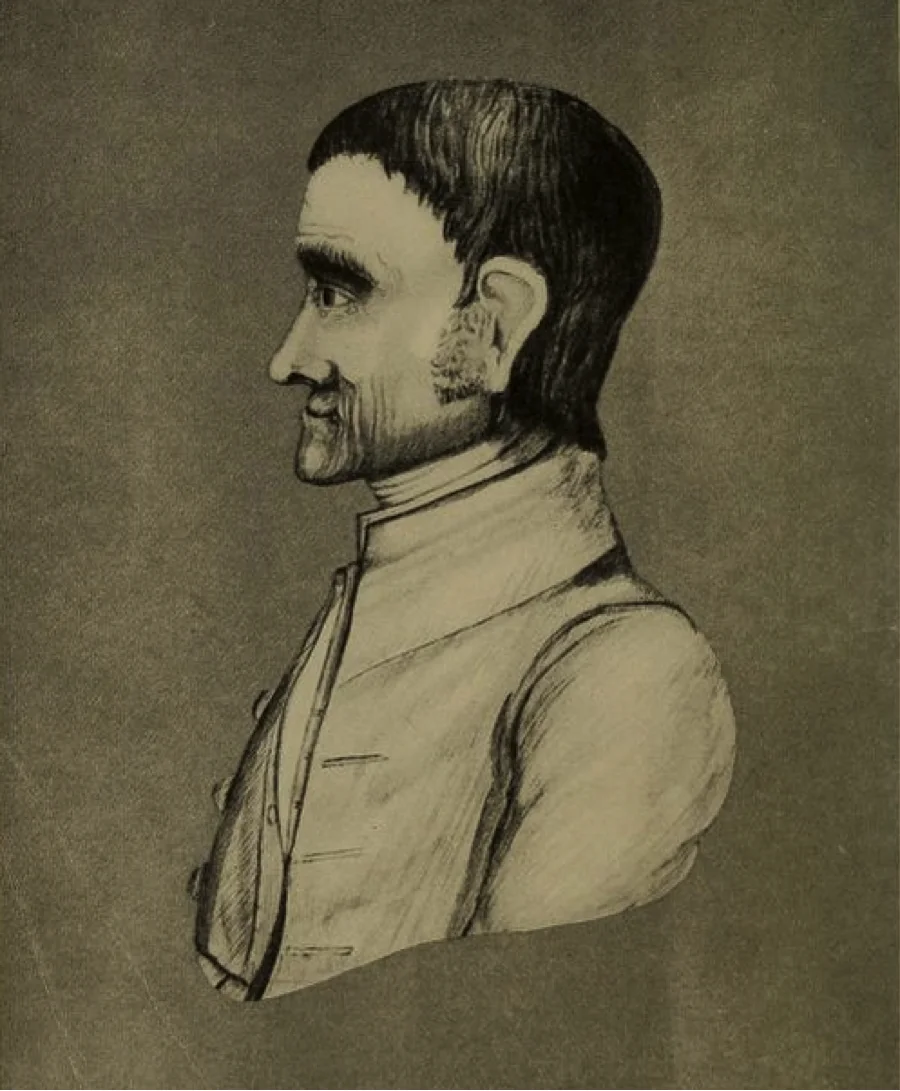
Born in France
Born into a Huguenot family at St Quintin. After his father's estate was confiscated in 1715 the family fled to Holland, then London, then Pennsylvania.
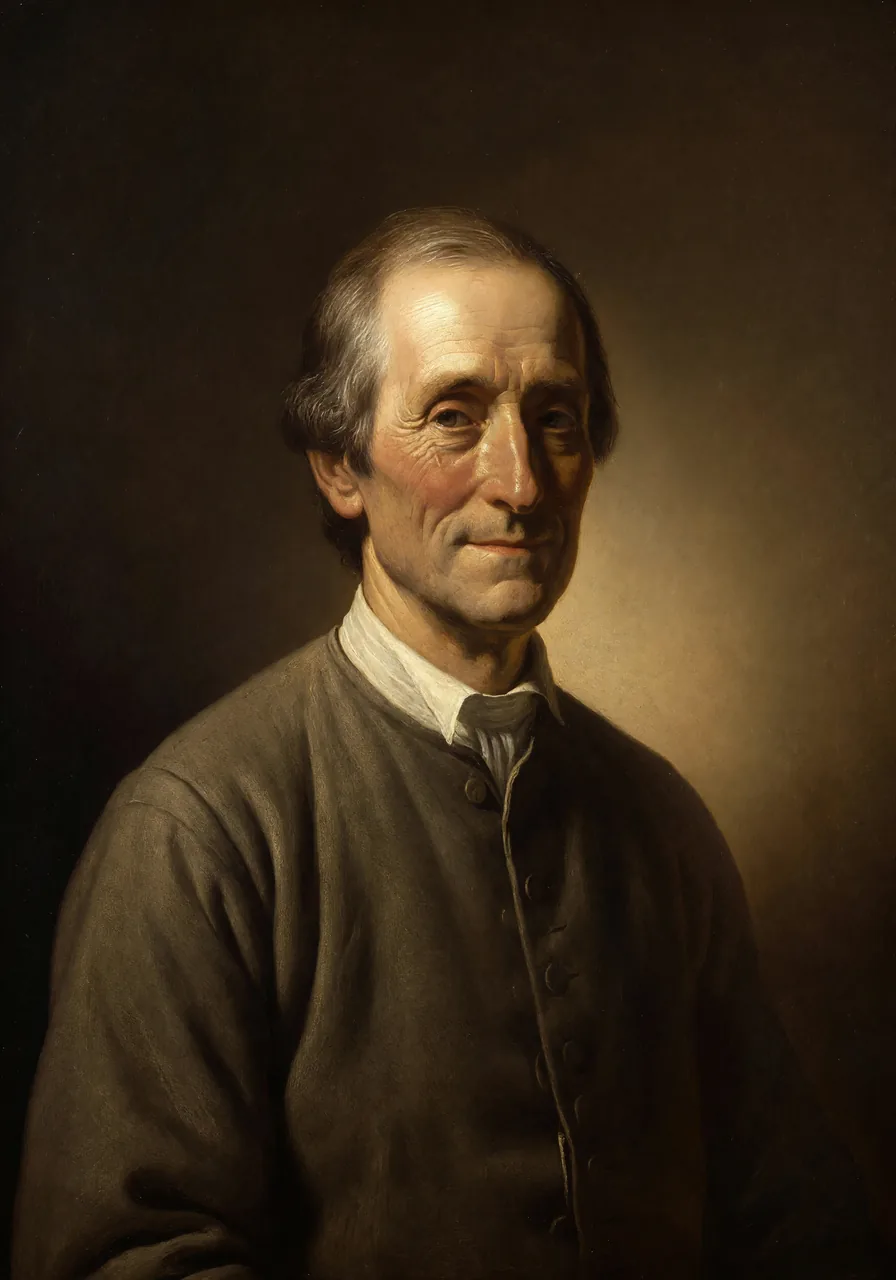
Intellectual Architect of the Abolitionist Movement
“No profit should tempt us to any practice inconsistent with truth.” — Anthony Benezet
Anthony Benezet was born on 31 January 1713 (Old Style) at St Quintin in France, the son of John Stephen Benezet. The family were Huguenots, French Protestants, and they were living on borrowed time: the Edict of Nantes had been revoked in 1685, and the elder Benezet suffered for his religion as his ancestors had. In 1715 his estate was confiscated, and he took his family out of France — an escape made past a military outpost on the frontier, and, by the family’s own account, past a sentinel who took a purse of gold and let a fleeing Protestant household through. Anthony was an infant. They sheltered a few months in Holland, then settled in London for sixteen years.
His father meant him for trade and placed him with one of the city’s respectable merchants. He did not stay: he declined, on religious grounds, to be occupied in the enterprises of commerce. He tried a trade instead and apprenticed to a cooper, but the work proved too heavy for a frame that was never robust. At about fourteen he joined the Religious Society of Friends. In 1731, aged eighteen, he came with his parents to Philadelphia.
Benezet came to teaching by way of failing at everything else. He married Joyce Marriott in 1736; three years later he moved to Wilmington, Delaware, to take up a branch of manufacture that neither answered his expectations nor suited his mind, and he was back in Philadelphia within months. Then he began to teach, at Germantown. In 1742 a vacancy opened in the English department of the public school founded by charter from William Penn — the institution now known as the William Penn Charter School — and its trustees asked him to take it. He stayed twelve years. In 1755 he left to open a school of his own for the instruction of girls, and was soon entrusted with the education of daughters of the most affluent families in the city.
He also pursued teaching in a direction almost nobody else was willing to go. From around 1750, when his concern over the slave trade first became visible to those around him, he ran an evening school for Black Philadelphians, which — in his biographer’s plain phrase — he taught gratuitously himself, after a full day in his own classroom. When Friends later resolved on a more ambitious version of the same thing, a school for the instruction of Black people with a building of its own, Benezet gave liberally out of a limited income and was tireless in soliciting donations from wealthier members of the meeting. He did not found that school single-handed, and his own account gives the credit to his brethren; what he supplied was the argument, the money, and eventually the teaching.
Everything in his abolitionism grows out of the classroom. He knew Black children as pupils, and his argument that intellectual capacity was in no way distributed by race rested on daily observation rather than on theory.
His method as a writer was documentary. He was not the first Friend to condemn slavery, but he was the one who assembled the evidence and put it into the hands of people who could act on it. He began by circulating short pieces through almanacs and newspapers; Observations on the Inslaving, Importing and Purchasing of Negroes first appeared in 1759. An Account of that Part of Africa Inhabited by the Negroes followed in 1762, A Caution and Warning to Great Britain and her Colonies in 1767, and in 1771 his most consequential book, Some Historical Account of Guinea, which set out the rise and progress of the slave trade from the testimony of traders and travellers themselves — the witnesses hardest for a defender of slavery to dismiss. He printed these at his own expense and posted them, with a covering letter, to people of note on both sides of the Atlantic, the Archbishop of Canterbury among them.
It was Some Historical Account of Guinea that reached Thomas Clarkson and gave the young Cambridge scholar the factual spine of the essay that launched the British abolition campaign; Clarkson in turn brought in William Wilberforce and Parliament. Benezet is the hinge between John Woolman’s personal witness among American Friends and the political machinery that eventually ended the trade.
The organisation followed from a rescue. Benezet intervened to stop a group of kidnapped Black people being moved from New Jersey through Philadelphia toward a southern state, and pressed their claim to freedom until it was established. Out of that case grew the Society for the Relief of Free Negroes Unlawfully Held in Bondage, founded in 1775 and among the first anti-slavery societies anywhere; the incorporated body that succeeded it — the Pennsylvania Abolition Society — was presided over in turn by Benjamin Franklin, James Pemberton, Benjamin Rush and Caspar Wistar.
On 25 August 1783 he wrote directly to Charlotte, Queen of Great Britain, sending her his tracts and asking her attention for people who were, as he put it, altogether deprived of the means of soliciting relief for themselves. The queen was reported to have said that the writer was truly a good man, and to have undertaken to read the books. He also wrote against the trade in spirituous liquors, and his sympathies extended to anything capable of feeling: for several of his last years he ate no animal food at all, and the sight of blood would make him faint.
He died in Philadelphia on 3 May 1784, aged seventy-one. He was buried in Friends’ burial ground two days later, before the largest gathering Philadelphia had seen on such an occasion — every rank and profession in the city, and among them many hundred Black people, who came, his biographer wrote, to testify by their attendance and by their tears.
Friends Illuminated has published A Short Account of the People Called Quakers, Benezet’s plain introduction to the Friends for readers who knew them only by rumour — the book that sets out the ground he stood on, and turns at its close to the keeping of slaves as a thing utterly at odds with it. The eighteenth-century original remains free in the public domain; the modernized edition simply makes it readable. His larger anti-slavery works, Some Historical Account of Guinea and A Caution and Warning to Great Britain, are still in the research queue. His place among the Friends who carried the antislavery testimony — with John Woolman before him and the long Quaker campaign that followed — can be followed on the Quaker history timeline.
Sources: Roberts Vaux, “Memoirs of the Life of Anthony Benezet” (Philadelphia, 1817), compiled from Friends’ memorials, Clarkson’s history, and Benezet’s own manuscript memorandums and letters — the source of the dates, the flight from France, the schooling, the funeral, and the letter to Queen Charlotte. First-edition dates for the anti-slavery works confirmed against library catalogue records.
Born into a Huguenot family at St Quintin. After his father's estate was confiscated in 1715 the family fled to Holland, then London, then Pennsylvania.
Published his first essays against the slave trade, combining moral argument with documentary evidence.
Left the Penn Charter school after twelve years to teach girls, including daughters of the leading Philadelphia families.
Published his most influential work, providing detailed evidence of the slave trade's horrors.
Having long taught an evening school himself without pay, he funded and raised subscriptions for the larger school Friends established.
Helped found the Society for the Relief of Free Negroes Unlawfully Held in Bondage — later reconstituted by Franklin and Rush as the Pennsylvania Abolition Society.
Died on 3 May, aged seventy-one. His burial drew the largest gathering the city had seen on such an occasion, including many hundred Black Philadelphians.
Benezet's plain, unpolemical introduction to the Friends — their rise in England, their settlement in Pennsylvania under Penn's Charter of Privileges, and the principles of worship, peace and conscience by which they lived, closing on the keeping of slaves as a thing at odds with all of it.
The documentary evidence that persuaded Clarkson and launched the parliamentary abolition campaign.
A powerful warning about the moral consequences of the slave trade.